

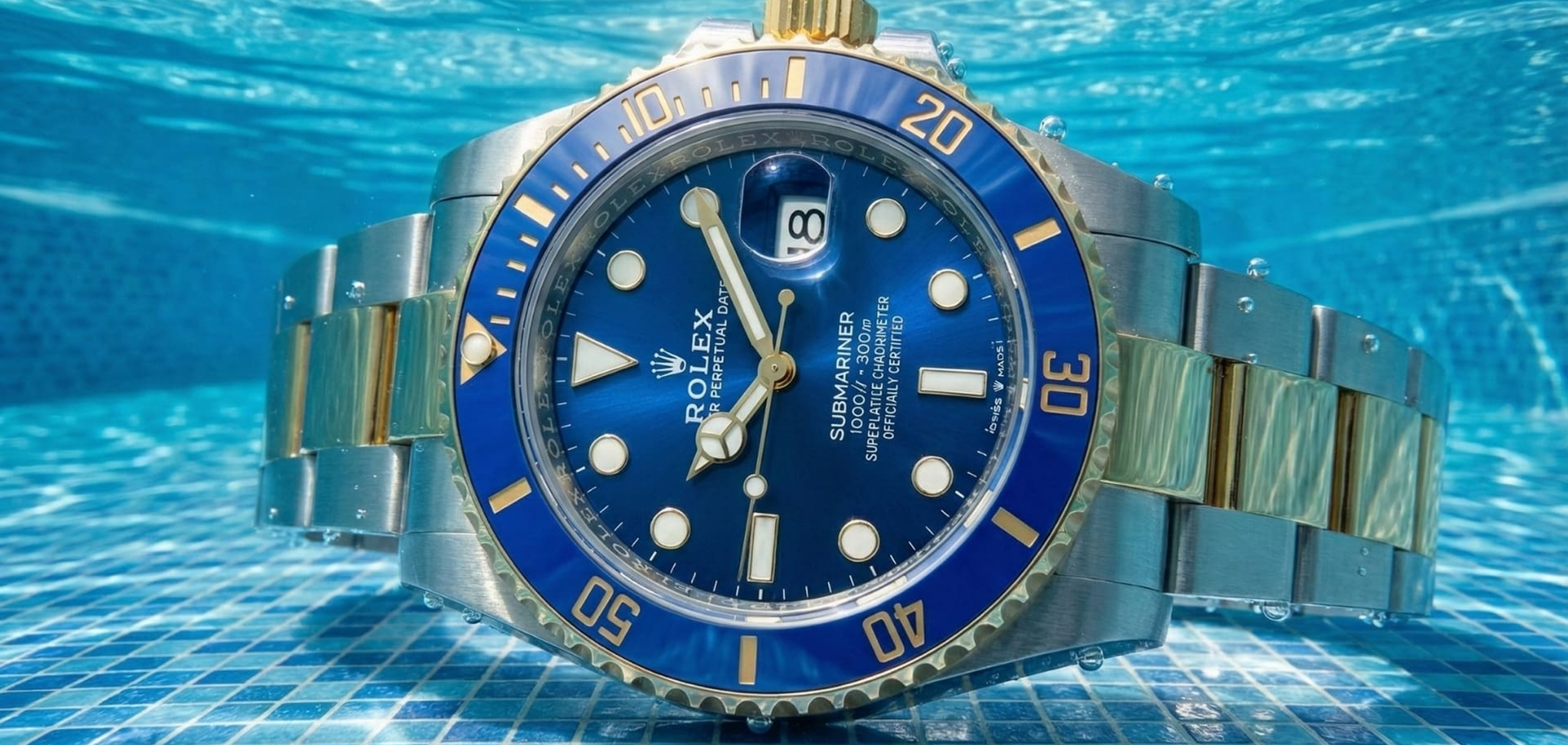
Before the Pool, Yacht or Beach: A Dubai Luxury Watch Water Resistance Guide
Before you take a watch into the water, check the model’s specification. Then check the specific watch you are wearing.
These are two different checks, and most owners only do the first. A 300m water resistance specification tells you how a particular reference was designed and tested when it left the factory. It tells you little about the sealing condition of the specific example on your wrist, especially if you bought it pre-owned, it hasn’t been serviced in years, or the crown shows any sign of wear.
In Dubai, this matters more than it does in most cities. Pool use, saltwater, and temperature swings between air-conditioned interiors and the heat outside create conditions that accelerate seal wear. Understanding what your watch’s depth rating actually means, and what it doesn’t, is basic ownership knowledge worth having before November’s boat season begins.
What a Depth Rating Does and Doesn’t Tell You
Water resistance ratings on watch dials and specification sheets describe how a watch was tested before it left the manufacturer. The ISO 6425 standard for dive watches and general water resistance testing uses static pressure tests under controlled conditions. Real-world use is different: movement through water creates dynamic pressure, sudden temperature changes affect seals, and time degrades gaskets regardless of how carefully a watch is handled.
A watch stamped with 100m water resistance is not necessarily safe for swimming. The Swiss watch industry has broadly moved toward more intuitive labeling, but older examples and some current pieces still carry numerical ratings that buyers interpret more literally than they should.
As a general guide, watches rated below 50m are designed to withstand minor splashes. Between 50m and 100m, the watch can handle swimming in most conditions, but not regular diving or active water sports. Above 100m and into dive-watch territory, the piece is built for sustained immersion, though the specific model’s construction and the current condition of its seals both still matter.
None of these ranges automatically apply to the watch in your collection right now, especially if it hasn’t been pressure-tested recently.
The Crown, the Seals, and Why Both Matter
The most common point of water ingress on a luxury watch is the crown. On a screw-down crown model, the crown must be correctly secured before the watch enters water. This applies to Rolex’s Oyster case watches. Rolex states in its care guidance that, on applicable models, the crown must be screwed down properly to maintain the seal.
This sounds obvious. People also forget this, especially when they wear a screw-down crown daily and set the date or time regularly. If you repeatedly wind a crown and leave it in the open position, the watch’s water resistance at that moment is essentially zero, regardless of what the dial says.
Beyond the crown, watches use internal gaskets at the case back and crystal to maintain their seal. These gaskets are typically made from rubber or synthetic compounds that degrade over time from heat, UV exposure, and contact with chlorine and salt. A gasket that worked when the watch left the factory may not work five years later.
Cartier’s official care guidance addresses this directly. Cartier recommends replacing water-resistance seals about every two years under normal conditions and having them checked annually for watches used frequently near or in water. This differs from what many owners assume, and it reflects a material reality that applies across the market, not just to Cartier pieces.
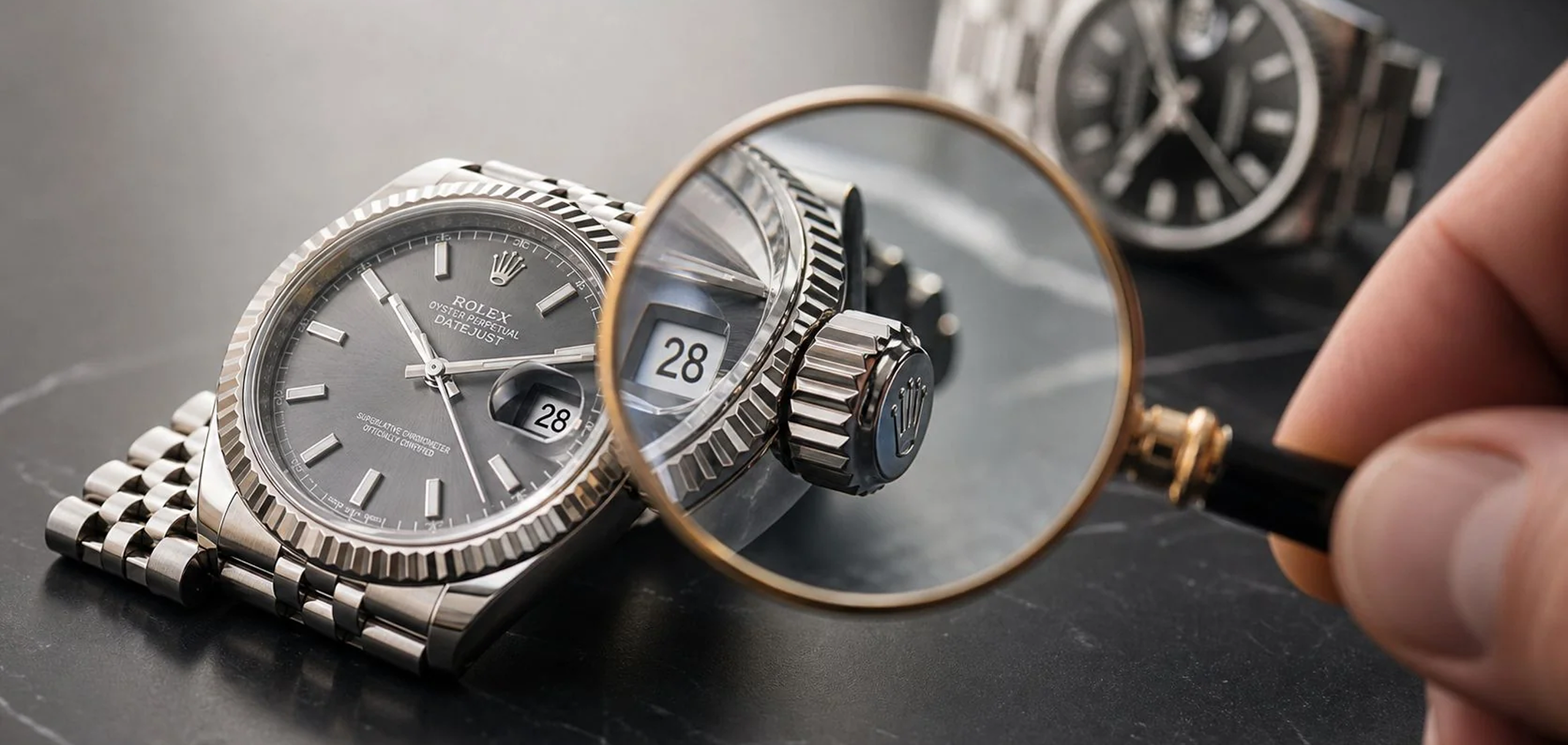
Brand-Specific Care: Rolex and Cartier Are Not Interchangeable
One common mistake buyers make is applying a single set of water resistance rules to all luxury watches. Brands use different case architectures, different crown systems, and different gasket materials. Care instructions vary accordingly.
For Rolex’s Oyster case models, the screw-down crown is the primary protection mechanism. Rolex recommends rinsing the watch with fresh water after exposure to saltwater or sand. The crown must be screwed down before any water contact. Rolex also recommends professional servicing approximately every ten years depending on the model and actual usage, and its official service process includes waterproofness testing. This does not mean a Rolex is safe to swim with if the crown was last serviced eight years ago. It means that a properly maintained, recently serviced Rolex with a correctly secured crown is built for water exposure.
For Cartier, the situation is more nuanced. Many Cartier pieces are not designed for immersive water use at all. The Tank, Santos, and Ballon Bleu lines carry water resistance ratings that cover everyday splashes and light exposure, not swimming or diving. Cartier’s care guidance recommends against taking pieces with leather straps into water regardless of the case rating. The seal-maintenance recommendation above reflects that Cartier’s case constructions, particularly on dress and mid-tier pieces, rely more on gasket integrity than on mechanical crown systems.
Knowing which watch you have and reading the brand’s care instructions for that specific model isn’t optional. Applying one brand’s care rules to another brand’s watch is a reliable way to damage something expensive.
Pre-Owned Buyers: When Was the Water Resistance Last Tested?
If you bought your watch pre-owned and haven’t serviced it since, ask this question before it goes anywhere near water.
A pressure test is straightforward. A watchmaker places the watch in a chamber and tests whether it holds its rated pressure under controlled conditions. The test takes minutes. The result tells you whether the seals are currently functional, regardless of what the dial says the rated depth is.
For watches sourced from the pre-owned market, the original water resistance rating reflects factory testing. That number doesn’t reflect what happened in the years between then and your purchase. A recently serviced piece from an authorized service center will have been pressure-tested as part of the service. A piece with no service history and an unknown previous owner has an unknown current water resistance, regardless of the specification.
WatchX’s repair and servicing process in JLT includes water-resistance testing as part of the final assessment. Each completed service includes a detailed service report. If you recently purchased a pre-owned watch and want to understand its current water resistance before exposing it to the pool or sea, that is a conversation worth having with the team before November’s events, not after.
Pool, Sea, Leather, and Chronograph Pushers: What to Check Per Watch
A few specifics worth knowing that often get missed in general guides:
Chlorine in swimming pools is harder on rubber gaskets than saltwater. If you swim regularly in chlorinated pools while wearing a watch, and the model is rated for it, consider having the seals checked more frequently than the standard service interval suggests.
Saltwater and sand can work into the gap between the crown and the crown tube, even on a screw-down model, if the crown isn’t fully secured. Rinse with fresh water after exposure to seawater. Do not rinse in hot water, as it can cause thermal shock to the seals.
Leather straps are not suitable for any water exposure, regardless of the case’s water resistance rating. A leather strap exposed to seawater regularly will deteriorate quickly. The Overseas’ interchangeable strap system exists partly for this reason.
Chronograph pushers introduce additional potential points of water ingress. Some chronograph models specifically warn against operating the pushers while submerged. Check the specific model’s manual before assuming the pushers have the same depth rating as the rest of the case.
When to Request an Inspection
If any of the following apply, ask a watchmaker to inspect and pressure-test the watch before exposing it to water:
The watch has not been serviced in five or more years. The crown has any unusual resistance, looseness, or feel when setting the time. The watch was bought pre-owned with no service documentation. You have noticed any fogging inside the crystal, which indicates moisture ingress has already occurred. The watch has been dropped or subjected to an impact.
For Cartier pieces used near water, the brand recommends inspecting the seal every two years. For Rolex and other brands with screw-down crowns and a ten-year general service interval, a pressure test at the halfway point is a reasonable precaution rather than an unnecessary expense.
WatchX offers repair and servicing from the JLT showroom. The team can advise on what a specific watch needs before or after water exposure. Details at watchxglobal.com/repairs/
Frequently Asked Questions
Can I swim with a pre-owned Rolex?
It depends on the model and the watch’s current condition. Rolex Oyster case models are built for water use when the crown is screwed down correctly, and the seals are intact. If a pre-owned Rolex hasn’t been serviced recently and has no documented service history, have it pressure-tested before swimming. The depth rating on the dial reflects factory testing, not the current sealing condition.
Does 100m water resistance mean my watch is safe in water right now?
Not necessarily. The rating reflects how the watch was tested when it left the manufacturer. If the seals haven’t been maintained, the crown shows wear, or the watch hasn’t been serviced in years, the current water resistance may be less than the rated figure. Have it tested before relying on the specification.
How often should Cartier seals be checked?
Cartier recommends replacing water resistance seals about every two years under normal conditions, and checking them annually for watches used frequently near or in water. This applies even if the watch looks fine and has not been immersed.
Should I get a recently purchased pre-owned watch pressure-tested?
Yes, particularly if it has no documented service history. A pressure test takes minutes and tells you whether the current seals are functioning as rated. This is a sensible step before taking any pre-owned watch into a pool or the sea, regardless of the depth rating on the dial.
Does WatchX offer water-resistance testing in Dubai?
WatchX’s servicing process at the JLT showroom includes water-resistance testing to complete the service. Contact the team via watchxglobal.com/repairs/ to discuss what is appropriate for a specific watch.
Sources:
Rolex care instructions
Rolex service procedure
Cartier seal and water-resistance guidance
WatchX repair services