Both Rolex Certified Pre-Owned and a trusted independent Dubai pre-owned dealer can be legitimate buying routes. They are not identical. Rolex CPO gives buyers a manufacturer-issued warranty, official retailer experience, and full Rolex service through the authorised network. A trusted independent dealer can offer broader secondary-market choice, access to discontinued references, different pricing logic, trade flexibility, faster access to specific pieces, and its own documented authentication and warranty process. The right choice depends on the exact watch you want, what you already own, and what kind of support matters most after the purchase.
What Rolex Certified Pre-Owned actually means
Rolex launched its Certified Pre-Owned programme as a defined, manufacturer-backed buying route for second-hand watches. Here is what it involves:
The programme applies to second-hand Rolex watches that are at least two years old. It is not available from every watch retailer. It is specifically offered only through Official Rolex Jewelers who participate in the CPO programme. Not every Official Rolex Jeweler offers it.
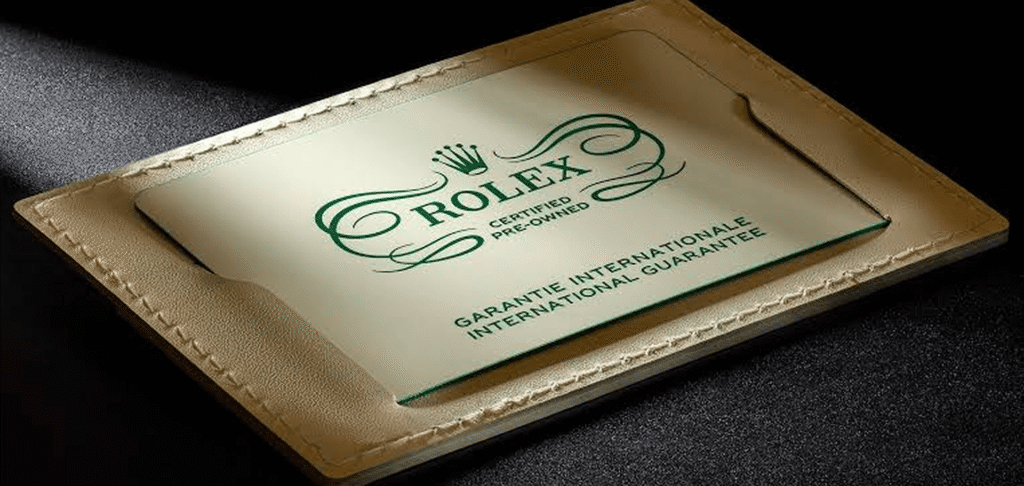
For a watch to enter the Rolex CPO programme, it goes through Rolex authentication. Where required, it receives a full Rolex service. It is supplied with a new two-year international guarantee from the date of purchase, a distinct CPO seal, and a CPO guarantee card.
The official Rolex warranty through the CPO programme is genuine and covers the movement for defects during the two-year period. It can be serviced at any Official Rolex Service Centre globally, which matters for buyers who travel or may move.
The CPO programme does not cover every Rolex reference. Selection depends on what a participating retailer has available at any given time.
What a trusted independent Dubai pre-owned dealer does differently
WatchX is a certified pre-owned dealer in JLT Cluster C, Dubai. It is not an Official Rolex Jeweler and does not issue Rolex manufacturer warranties.
What WatchX does: every Rolex entering the collection is assessed across its movement, case, dial, crystal, bracelet, and visible components. The reference number and serial number are verified. The movement calibre is confirmed. Bracelet codes are checked. Documentation and condition are reviewed and recorded.
The WatchX Authenticity Guarantee covers a 47-point inspection. The buyer receives an authentication certificate, an inspection report, serial documentation, and high-resolution photographs. Written condition disclosure covers what is original and what has been serviced or replaced.
The WatchX warranty covers movement defects for the period and terms stated at point of sale. This is not a Rolex manufacturer warranty, but it is a documented warranty from the dealer with a clear scope.
The WatchX authentication service includes movement analysis, serial and reference checks, case and dial inspection, and provenance documentation review. Standard report generation is typically 48 to 72 hours after receiving the watch. A full authentication certificate is issued on completion.
Beyond the watch itself, WatchX offers valuation, sourcing, sell, and trade support, which official CPO retail does not.WatchX is a certified pre-owned dealer in JLT Cluster C, Dubai. It is not an Official Rolex Jeweler and does not issue Rolex manufacturer warranties.
What WatchX does: every Rolex entering the collection is assessed across its movement, case, dial, crystal, bracelet, and visible components. The reference number and serial number are verified. The movement calibre is confirmed. Bracelet codes are checked. Documentation and condition are reviewed and recorded.
The WatchX Authenticity Guarantee covers a 47-point inspection. The buyer receives an authentication certificate, an inspection report, serial documentation, and high-resolution photographs. Written condition disclosure covers what is original and what has been serviced or replaced.
The WatchX warranty covers movement defects for the period and terms stated at point of sale. This is not a Rolex manufacturer warranty, but it is a documented warranty from the dealer with a clear scope.
The WatchX authentication service includes movement analysis, serial and reference checks, case and dial inspection, and provenance documentation review. Standard report generation is typically 48 to 72 hours after receiving the watch. A full authentication certificate is issued on completion.
Beyond the watch itself, WatchX offers valuation, sourcing, sell, and trade support, which official CPO retail does not.
CPO seal and guarantee card; original papers where available
Original papers where available; condition disclosed
Best suited buyer
Buyer who prioritises manufacturer warranty and official retailer experience
Buyer seeking specific reference, trade option, or secondary market pricing
When Rolex CPO makes sense
The Rolex manufacturer guarantee is the priority. Some buyers specifically want the Rolex-issued warranty rather than a dealer warranty. For them, CPO is the correct route.
The official retailer experience matters. Some buyers prefer to purchase from an Official Rolex Jeweler. CPO provides that.
The specific reference is available at a participating jeweller. If the watch the buyer wants is currently in stock through a CPO programme participant, and the price and condition are right, CPO removes any ambiguity about warranty.
When WatchX may make more sense
The buyer wants a specific discontinued reference.Rolex CPO selection is limited to what participating jewellers currently hold. Discontinued references like the Nautilus 5711, the No-Date Submariner in certain configurations, or older GMT variants often do not appear in CPO stock. The secondary market, accessed through an independent dealer, is where these live.
The buyer wants to compare multiple market examples. An independent dealer with broad inventory allows a buyer to evaluate condition and pricing across several examples of the same reference before deciding.
The buyer has a watch to trade. WatchX assesses trade-ins same day at the JLT showroom. The trade service can factor an existing watch into the purchase of a new one. Official Rolex CPO retail does not typically offer this.
The buyer wants local sourcing help. The WatchX Watch Concierge can locate a specific reference not currently in stock and bring it to the buyer in Dubai, assessed and documented.
The buyer wants a valuation of their current watch before purchasing. WatchX can value a buyer’s existing Rolex as part of the process of deciding on a next purchase, using Dubai market data and international reference points.
The buyer wants immediate access to a specific current pre-owned reference. If the watch is in the WatchX showroom, the purchase can be completed the same day with full condition disclosure, authentication certificate, and dealer warranty.
The seven questions to ask before buying any pre-owned Rolex
These apply regardless of whether the purchase is through CPO or an independent dealer:
What is the exact reference and serial number? Confirm both before purchase. A reference number identifies the model. A serial number places the watch in production history and should align with all other details.
What does the warranty cover? A Rolex CPO warranty covers the movement for two years through any Official Rolex Service Centre. A WatchX warranty covers movement defects for the stated period and terms given at point of sale. Understand the scope before committing.
What is the condition disclosure? Ask specifically about case polishing, bracelet stretch, dial originality, crystal condition, and any replaced components. A reputable dealer should provide this in writing.
What documentation is included? Original papers, service history, and box all affect the watch’s value and ease of future sale. Know exactly what comes with the purchase.
What authentication process was used? For CPO, Rolex authenticates centrally. For WatchX, the 47-point inspection produces a written certificate. Ask to see the inspection report before purchase.
What is the warranty service route? A Rolex CPO warranty can be serviced at any Official Service Centre globally. A WatchX dealer warranty is serviced through WatchX and qualified partners. If you travel frequently, the global Rolex service network has practical advantages.
Is the full price clear before committing? Confirm the total including VAT or any applicable charges. No hidden costs should emerge after agreement.
Final takeaway
There is no single correct buying route. There is only the one that gives the right reference, clear condition, credible authentication, correct paperwork, and confidence in the transaction. Rolex CPO delivers manufacturer certification and a global warranty. A trusted Dubai independent dealer delivers secondary market choice, trade flexibility, and local support.
The WatchX Rolex collection includes current certified pre-owned references across the full Rolex lineup. For valuation of an existing Rolex, trade discussions, or sourcing a specific reference, the showroom is at JLT Cluster C, Dubai.
Frequently asked questions
Is Rolex Certified Pre-Owned available in Dubai?
Yes, through participating Official Rolex Jewelers in Dubai. Not every Official Rolex retailer offers the CPO programme, so availability depends on which local authorised jewellers participate and what they currently hold in CPO stock.
Is Rolex CPO better than buying from a pre-owned dealer?
It depends on what matters most to the buyer. Rolex CPO offers a manufacturer-issued two-year international guarantee and official retailer experience. An independent dealer like WatchX can offer broader reference choice, access to discontinued models, trade flexibility, and secondary market pricing. Neither route is universally better.
Does WatchX sell Rolex Certified Pre-Owned watches?
No. WatchX is a certified pre-owned dealer but is not an Official Rolex Jeweler and does not issue Rolex manufacturer warranties. WatchX conducts its own 47-point inspection, issues an authentication certificate and inspection report, and provides a dealer warranty covering movement defects for the stated terms.
What warranty do pre-owned Rolex watches from WatchX have?
WatchX provides a dealer warranty covering movement defects for the period and terms stated at point of sale. This is not a Rolex manufacturer warranty. The scope and duration are explained clearly at the time of purchase and documented in writing.
Can I trade my Rolex toward another watch at WatchX?
Yes. WatchX assesses trade-ins same day at the JLT showroom. The trade value is based on current Dubai market conditions, condition assessment, and documentation completeness. The assessed value can be applied toward a purchase from the WatchX collection.
Are box and papers important when buying a pre-owned Rolex?
Yes, materially. For current Rolex sport references, the difference between a complete set with original papers and a watch-only can be AED 5,000 to AED 25,000 or more depending on the reference. Papers also allow the buyer to verify the production period, original configuration, and retail history of the specific watch.
Can an independent dealer authenticate a Rolex?
Yes. WatchX’s authentication process covers reference and serial verification, movement calibre assessment, case, dial, and bracelet inspection, and documentation review. The outcome is a written authentication certificate. This is not the same as Rolex’s own manufacturer authentication, but it is a documented and systematic assessment by an experienced specialist team.
Is a pre-owned Rolex from a Dubai dealer safe to buy?
From a trusted, established dealer with a documented authentication process, written condition disclosure, and a clear warranty, yes. Ask for the inspection report before purchase, confirm condition in person at the showroom, and ensure all documentation is present and consistent with the watch. The WatchX Authenticity Guarantee page describes the full inspection process.
WatchX is a certified pre-owned luxury watch dealer based in JLT, Dubai. WatchX is not an authorised retailer for Rolex or any other brand referenced in this article.
Certain Rolexwatches made for, sold in, or formally presented within the Middle East carry a collector importance that goes beyond the core reference number. Their value can come from regional history, original dial markings, royal or military provenance, correct accessories, and a verifiable ownership story that connects the watch to a specific moment or institution in the Gulf. But a regional symbol alone is not enough. A UAE coat of arms, a Khanjar marking, or Eastern Arabic numerals add genuine significance only when the rest of the picture holds together: originality confirmed, documentation credible, production period consistent, and condition appropriate to the age and claimed history. Without that, a marking is just a marking.
What makes a Rolex a Middle East collector watch?
Rolex has produced watches for the Middle East that differ from their standard catalogue configurations. Some carry national coats of arms or emblems on the dial. Others feature Eastern Arabic numerals rather than Western ones. Some were commissioned for official presentation, gifted by governments or rulers to military officers, diplomats, or visiting dignitaries. Others were sold through regional retailers and carry retailer designations that place them specifically in the Gulf’s watch-buying history.
These watches are not rare simply because they exist. They are significant when the specific combination of reference, production period, dial configuration, documentation, and ownership story is intact and verifiable. Auction houses have documented examples of this over many years, and the most valuable regional Rolex pieces share a consistent quality: their provenance is a package, not a story added after the fact.
UAE watches: when a dial records a piece of history
Phillips has documented rare examples of Rolex made specifically for UAE institutions and officials. One recorded example is a Rolex produced for the UAE Armed Forces, carrying the UAE Armed Forces emblem directly on the dial. Another is a vintage GMT-Master II made for the UAE Ministry of Defence.
That Ministry of Defence example is particularly well documented. It carries the UAE Quraysh Hawk on the dial alongside a signature of His Highness Mohammed bin Rashid Al Maktoum. The watch was originally gifted to Captain José Hilario Trujillo in 1981, and its provenance materials trace the gift and the recipient. Phillips has also documented a Rolex steel chronograph with the UAE coat of arms and Mohammed bin Rashid Al Maktoum signature on the dial, carrying the wording Wazarah Ad Difa’A.
What these pieces share is not simply the marking. It is the full picture: the dial emblem matches the production period, the case shows no signs of later modification, the provenance documentation is credible, and the watch’s ownership story can be traced. That combination is what separates a genuinely collectible UAE piece from one where a marking has been added later.
Khanjars, Oman and the significance of presentation provenance
The Khanjar, the traditional curved dagger that forms Oman’s national emblem, appears on certain Rolexwatches connected to Oman’s official gifting culture. These are among the most thoroughly documented of all Middle Eastern Rolex examples, and they illustrate clearly why presentation materials matter.
Christie’s Dubai has offered a 1974 RolexDay-Date reference 1803 with a red Khanjar marking. What gave that piece its collector standing was not the marking alone but the supporting provenance: a Rolex guarantee confirming sale at Asprey and Co in 1974, a Sultan Qaboos gift card, a Rolex leather wallet, hang tag, and a presentation box with Khanjar logo. The gift chain was documented. The retailer history was verifiable.
Christie’s Dubai offered a second 1974 Day-Date 1803, this one with a blue dial and red Khanjar mark, along with an Asprey-engraved caseback. Sotheby’s has also documented a platinum RolexDay-Date II reference 218206 with Arabic day and date, a royal Khanjar crest on the caseback, papers, and evidence that it was delivered to the Diwan of the Royal Court.
These pieces are not collector items because they have a Khanjar. They are collector items because the Khanjar is part of a complete and verifiable story.
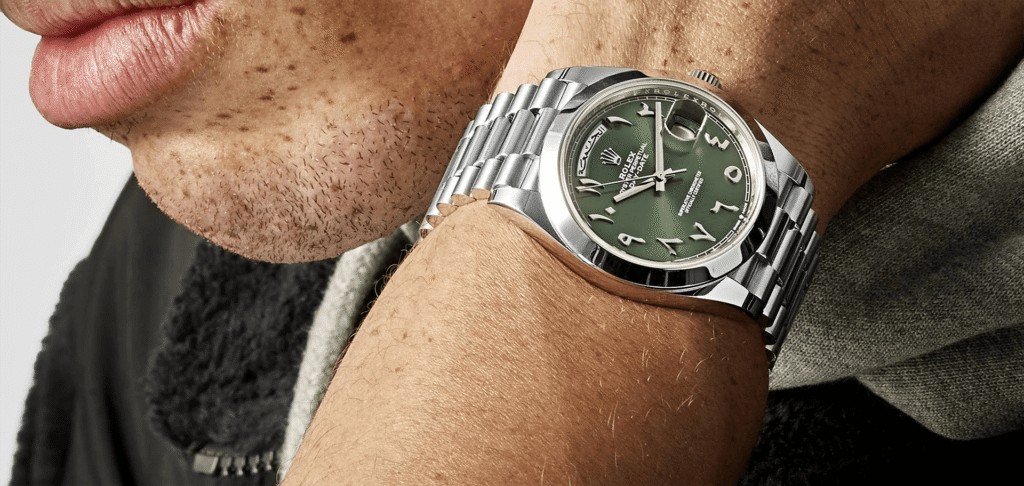
Eastern Arabic numeral Rolexwatches, where the hour markers use the numeral forms common in Arabic script rather than Western numerals, have attracted sustained collector interest, particularly when combined with precious metals, original retailer provenance, and complete documentation.
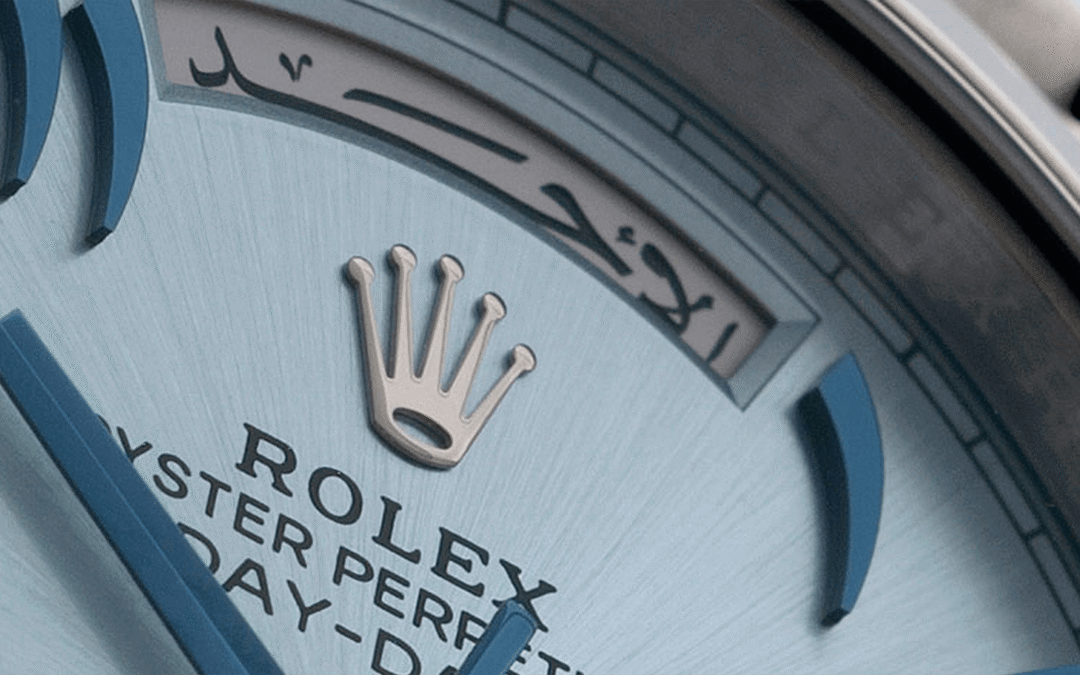
Phillips documented a platinum Daytona reference 116506 with an ice-blue Eastern Arabic numeral dial. Supporting the piece was an original guarantee from Saddik and Mohamed Attar Co. in Saudi Arabia, a card holder, hangtags, and original packaging.
It is worth being direct about the limits of this category. Eastern Arabic numerals on a Rolex dial do not automatically create a valuable watch. The numeral configuration is one element. The reference itself needs collector standing. The dial must be confirmed factory original. The production context must align with the claimed retailer and period. Documentation must exist and be credible. A watch with Eastern Arabic numerals but no papers, unclear provenance, or a weak underlying reference is not straightforwardly valuable on the strength of the numeral style alone.
The provenance checklist
For any Middle Eastern or regional Rolex, serious buyers should work through these questions before committing:
Is the dial original? This is the central question. Regional markings on a refinished, replaced, or aftermarket dial change the entire collector proposition. A genuine factory original dial in original condition is the foundation of the piece’s value.
Does the reference fit the claimed configuration? A UAE Armed Forces emblem, Khanjar marking, or Eastern Arabic numeral configuration should correspond to a production period and reference that aligns with the known history of similar pieces.
Does the serial range make sense? The serial number should correspond to the production period claimed. A mismatch between the serial range and the claimed gift date or retailer history is a flag that requires investigation.
Are papers and accessories credible? A Rolex guarantee card, retailer receipt, gift card, or official correspondence should match the production period, reference, and claimed provenance. Papers from a different decade, a retailer not associated with the Gulf, or box materials inconsistent with the production year are worth questioning.
Does the retailer or presentation story align with the watch? The Asprey and Co. retailer history for Khanjar Day-Date examples is documented and traceable. Regional military gift provenance should similarly align with the reference, production period, and known institutional history.
Has the watch been altered or over-polished? Original case surfaces, unpolished lugs, and correct bracelet condition are important for any collector piece. An over-polished case or softened lugs signal work that affects both originality and value, regardless of the dial.
The red flags that matter
The regional Rolex category attracts a specific risk: aftermarket modification. A standard dial can have markings added by printing, painting, or other methods. This has happened often enough that any UAE emblem, Khanjar, military marking, or Eastern Arabic numeral configuration should be treated with caution until confirmed.
Specific red flags:
Aftermarket printing on the dial. The printing quality, font weight, and position of factory regional markings follow consistent specifications. Aftermarket additions often show subtle inconsistencies visible under magnification.
Unclear or mismatched documentation. A gift card that does not align with the claimed date, a Rolex guarantee from a different retailer than claimed, or papers in a condition inconsistent with the watch’s age.
Mismatched components. A Khanjar box with a watch whose serial number postdates the claimed gift year. A dial marking associated with a reference not produced in the period claimed.
Stories that cannot be traced. Genuine official gift pieces have a clear chain: an institution, a recipient, a date, a documented occasion. Provenance described only in general terms, without specific details that can be checked, warrants scepticism.
A regional marking should never be accepted based on photographs alone. Physical examination by a specialist, alongside full documentation review, is the minimum standard for a serious purchase in this category.
Why local authentication matters in Dubai
Dubai is the natural hub for Middle Eastern Rolex assessment. The regional collector community, the auction activity, and the provenance context are all accessible here in a way they are not in Geneva or New York. A specialist in Dubai can cross-reference a UAE Armed Forces dial against documented examples, assess whether the case condition is consistent with the claimed age, and review whether the paperwork aligns with known Rolex production and Gulf retail history.
WatchX’s authentication service covers reference and serial number details, movement calibre, case and dial inspection, visible components, and documentation review. For regional pieces, the documentation and provenance review is especially important. The authentication report documents condition and originality findings and provides written confirmation of what can and cannot be verified.
WatchX valuations for regional pieces draw on Dubai market data, international auction results, and the specific combination of reference, condition, and documentation present in the watch being assessed. A regional marking adds value only when the supporting picture is intact.
Final takeaway
A rare regional Rolex becomes meaningful when its entire story holds together. The dial, the reference, the serial, the production period, the documentation, the condition, and the ownership chain should all align. When they do, these watches carry a kind of significance that no standard production Rolex can replicate. When they do not, the regional marking is the least reliable element of the piece.
The Rolex collection at WatchX includes pre-owned references across the GCC market, and the team can advise on authentication and valuation for regional pieces.
Frequently asked questions
What is a UAE dial Rolex?
A UAE dial Rolex is a Rolex watch where the dial carries a marking specifically associated with the United Arab Emirates, such as the UAE coat of arms, a UAE Armed Forces emblem, or an official institutional marking. These were typically produced for official presentation, gifted to military officers or officials, or commissioned by UAE government institutions. Their collector value depends on confirmed dial originality, production period consistency, and verifiable documentation.
What is a Rolex Khanjar watch?
A Khanjar is the traditional curved dagger that forms Oman’s national emblem. A Rolex Khanjar watch carries this emblem on the dial, caseback, or as part of the presentation accessories. These watches were typically connected to Oman’s official gifting culture and are most valuable when the Khanjar marking is factory original and supported by a complete provenance package including retailer history, gift documentation, and period-correct accessories.
Are Arabic dial Rolex watches rare?
Eastern Arabic numeral Rolexwatches are a collector category, but rarity depends on the specific reference, production period, condition, and documentation. A platinum Daytona with Eastern Arabic numerals and original Saudi retailer paperwork is a rare and specific piece. A Datejust with Eastern Arabic numerals in standard steel without documentation is a different proposition. The numeral style does not by itself make a watch rare.
Why do Middle East Rolex watches sell for more?
When they do command a premium, it is because of the combination of regional significance, confirmed factory original configuration, complete provenance documentation, and a narrow supply of genuine authenticated examples. The premium is justified when the entire provenance package is intact and verifiable. A regional marking without supporting documentation should not command the same premium.
How can I tell if a regional Rolex dial is original?
Physical examination by a qualified specialist is the only reliable method. Factory regional markings follow consistent specifications in printing quality, font, and positioning. Aftermarket additions often show inconsistencies visible under magnification. Photography is not sufficient for this assessment.
Does a presentation box prove a watch is genuine?
No. A presentation box with a Khanjar logo or UAE emblem supports the provenance story but does not confirm it independently. The box must be consistent with the production period and reference, the watch must align with the box, and all other documentation must support the same narrative. A box from a different period or inconsistent with the claimed retailer is a red flag, not reassurance.
Should I buy a UAE Armed Forces Rolex?
If the dial originality, production period, documentation, and condition all align and can be confirmed by independent authentication, a UAE Armed Forces Rolex can be a genuinely significant collector piece. If any of those elements is unclear or unverifiable, the premium is not justified. Independent authentication before purchase is strongly advisable.
Can WatchX authenticate a rare regional Rolex in Dubai?
Yes. WatchX’s authentication service covers reference and serial details, movement assessment, case, dial, bracelet, and visible component inspection, and provenance documentation review. For regional pieces, the documentation review is particularly important. Visit WatchX at JLT Cluster C, or contact the team to arrange an assessment before or after purchase.
WatchX is a certified pre-owned luxury watch dealer based in JLT, Dubai. WatchX is not an authorised retailer for any brand referenced in this article. This article does not constitute investment advice. Watch values depend on condition, documentation, market demand, and individual reference characteristics.
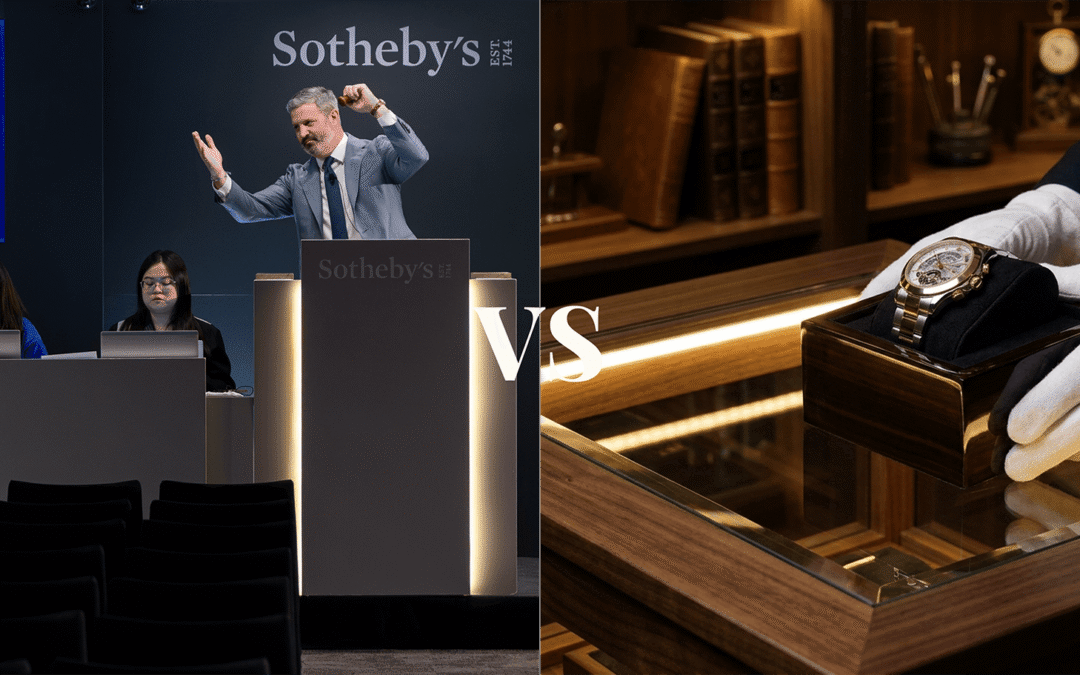
For most buyers in Dubai, a trusted local pre-owned dealer is the faster, clearer, and more practical route. You see the watch in person, you know the total price in AED before you commit, and you can discuss condition, papers, and service history face to face. But auctions are not a worse option across the board. For rare historical references, watches with unusual provenance, or pieces that simply do not appear through normal dealer inventory, an auction can be the only realistic path. The right choice depends entirely on the specific watch you want, not on a general preference for one channel over the other.
Why this question matters during auction season
October is part of the global autumn watch auction calendar. Sotheby’s Fine Watches begins 27 October 2026, and Sotheby’s Important Watches Hong Kong is scheduled for 16 to 17 October 2026. As these sales approach, buyers in Dubai start comparing what they see in auction estimates against what they can buy locally, often without fully understanding how different those two numbers are.
The estimate on an auction listing is not the price. It is guidance. The price you actually pay can be considerably more, depending on a range of fees, taxes, and logistics that are not visible in the lot description.
The number on the screen is not the final auction price
This is the point that catches the most buyers off guard. A watch listed in an auction catalogue with an estimate of AED 100,000 is not a AED 100,000 watch, at least not once you have paid everything required to own it.
Here is how the cost builds:
The estimate is the auction house’s guidance range for where the hammer might fall. It does not guarantee the watch will sell within it, and it does not include any fees.
The hammer price is what the winning bidder commits to when the auctioneer closes the lot. This is the opening cost, not the total cost.
The buyer’s premium is an additional charge applied by the auction house on top of the hammer price. The percentage varies by auction house and by sale. For a major international house, it is typically meaningful. Sotheby’s states that the total purchase price includes the hammer price, buyer’s premium, overhead premium where applicable, and local taxes.
Taxes, shipping, insurance, and import duty may also apply depending on where the auction is held, where you are located, and how the watch is delivered. Christie’s Dubai online-sale terms make clear that buyer’s premium is charged on the hammer price, with shipping, loss and damage liability charges, and relevant duties or taxes potentially adding to the final cost.
A practical example: if a watch hammers at AED 100,000, the buyer’s premium alone could add AED 15,000 to AED 25,000 or more before shipping, insurance, and import duties enter the calculation. Whether that final total is still a better deal than the same watch at a Dubai dealer depends entirely on the reference, condition, and what each option actually includes.
The right comparison is always total delivered cost against total delivered cost, not estimate against retail.
What an auction condition report can and cannot tell you
Major auction houses produce condition reports for lots, and these are worth reading carefully. Sotheby’s describes a condition report as a written description prepared by specialists before the auction, with online images also considered part of that information.
A condition report is useful, but it is not a substitute for seeing the watch yourself or having a specialist examine it on your behalf. There are condition issues that affect value significantly but are not always fully described in a general written report:
Case and bracelet issues
Over-polished cases where the brushed and polished surfaces have been smoothed out together
Softened lugs that no longer hold their original sharpness
Bracelet stretch that adds play and looseness
Non-original bracelet components or replaced clasp parts
Dial and movement issues
Refinished or chemically treated dials that no longer reflect original factory condition
Replaced or incorrect hands or indices
Non-original bezel or crystal
Documentation issues
Missing warranty card or certificate
Incorrect or unverifiable production period
Papers that do not align with the watch’s serial number or configuration
Box from a different period than the watch
Provenance issues
Ownership history that cannot be traced or verified
Regional markings that cannot be confirmed as factory original
For any watch above a certain price threshold, or for any technically unusual reference, requesting the condition report is essential. So is asking focused questions. A specialist in the reference you are buying can identify issues that a general auction description may not flag.
When buying at auction makes sense
Auctions remain the right route for specific situations:
Rare historical references that have not appeared in normal dealer inventory for years. A first-series Nautilus in original condition, a vintage Daytona in a specific dial configuration, a historically important reference from a specific production period: these are not usually sitting in a showroom.
Watches with unusual or documented provenance where the auction house has assembled the paperwork, photographs, and ownership history that supports the piece’s story. The right provenance can make a watch more meaningful to own and more valuable to sell later.
Middle East signed or commissioned watches with documented official history: UAE Armed Forces dial markings, royal gift cards, Ministry of Defence provenance, and similar. Auction houses like Phillips, Christie’s, and Sotheby’s have sold well-documented examples of these at auction where the full provenance package was assembled and verified.
Collectors who are comfortable with the process: bidding, fees, logistics, and the possibility that condition information is incomplete. Experienced auction buyers build this literacy over time.
You know the full price before you commit. No buyer’s premium calculation. No shipping uncertainty. The price you discuss is the price you pay.
You can inspect the watch in person. This is not a small advantage. Seeing a dial in natural light, checking the bracelet play, examining the case surfaces and lug sharpness, and reviewing the original paperwork in your hands tells you things that high-resolution photographs cannot.
Condition is discussed directly. A trusted dealer will tell you what is original and what is not, whether the case has been polished, and what service history exists. You can ask questions and get answers before the purchase.
Trade options are available. If you have an existing watch, a local dealer can often factor it into the transaction in a way that an auction simply cannot.
Immediate availability. No waiting for a sale date, bidding window, payment period, and international shipping. If the watch is in the showroom and the price works, it can be on your wrist the same day.
Local after-sales support. If a question arises after purchase, you have a dealer in Dubai you can speak to directly.
The seven questions to ask before bidding or buying
Whether you are considering an auction or a dealer, these questions apply:
What is the final all-in cost?
For an auction: hammer price plus buyer’s premium plus taxes plus shipping plus insurance plus any import duty. For a dealer: the stated price including any applicable VAT.
What condition issues are disclosed?
Ask specifically about case polishing, dial originality, bracelet stretch, and crystal condition. Do not rely on a photograph to reveal surface finish changes.
Are all visible components original?
This covers the dial, hands, bezel insert, bracelet, clasp, and crown. Any replacement should be disclosed and priced accordingly.
What documentation comes with the watch?
Original papers, warranty card matching the serial range, service records, purchase invoice, and box. Each affects both value and ease of future sale.
Can the watch be inspected before buying?
At a dealer, always. At a major auction, in-person previews are usually offered before the sale. Use them.
What happens if there is an issue after purchase?
A dealer’s warranty and return policy should be clear before you commit. An auction sale is generally final.
How easily can this watch be traded or sold later?
A reference with broad secondary market depth is easier to move than one with a narrow buyer pool. Understand the liquidity of what you are buying.
Auction, dealer, or sourcing request: choose based on the watch
There is a third option that is often overlooked: a sourcing request through a specialist dealer. If you want a specific reference that is neither currently in stock locally nor clearly available at upcoming auctions, a sourcing service can search the market, identify candidates, assess them on your behalf, and bring a verified option to you in Dubai.
WatchX handles sourcing requests for references outside current inventory through its Watch Concierge service. This can be a practical middle route for buyers who want a rare watch but do not want to manage auction logistics and international condition assessment alone.
Final takeaway
The better buying route is the one that gives you the right watch at the right price with clear condition and credible documentation. That is sometimes an auction, particularly for rare or historically important pieces. It is more often a trusted local dealer for current pre-owned references where inspection, pricing certainty, and local support matter.
The estimate on a catalogue page is the beginning of the conversation, not the conclusion.
Frequently asked questions
Is it cheaper to buy a luxury watch at auction?
Not necessarily. The hammer price is the opening cost, not the final one. Buyer’s premium, taxes, shipping, insurance, and potential import duty all add to the total. A watch that hammers at AED 100,000 can cost AED 130,000 or more by the time it arrives. Compare the total delivered cost against the dealer price, not the estimate against the retail price.
What is a buyer’s premium at a watch auction?
A buyer’s premium is a fee charged by the auction house on top of the hammer price. It is the auction house’s primary revenue mechanism. The percentage varies by auction house and sometimes by the value of the lot. Major international houses typically charge between 15% and 26% of the hammer price, sometimes on a sliding scale. Always check the specific sale’s terms before bidding.
Can I inspect a watch before bidding at auction?
Major auction houses typically offer in-person previews before a sale, and serious bidders use them. If you cannot attend in person, requesting high-resolution images, a detailed condition report, and asking focused questions about condition is the minimum. For high-value lots, having a specialist examine the watch on your behalf at the preview is worth the cost.
Are auction watches guaranteed to be authentic?
Auction houses do their own due diligence, but they are not infallible and their condition reports are not guarantees. If a significant issue is discovered after purchase, the remedy process can be complex and slow. Independent authentication before bidding is a sensible step for any high-value or technically unusual lot.
Should I buy a Rolex at auction or from a dealer in Dubai?
For a current pre-owned Rolex in good condition, a trusted Dubai dealer is usually the more practical route. You can inspect the watch, confirm condition and documentation, agree a clear AED price, and walk out the same day. Auctions make more sense for vintage Rolex references, unusual dial configurations, or historically documented pieces that do not appear in normal dealer stock.
Do auction prices include taxes and shipping?
No. Sotheby’s states that estimates do not include buyer’s premium, overhead premium, taxes, or potentially applicable resale royalties. Christie’s Dubai online sale terms note that shipping, loss and damage liability charges, and relevant duties or taxes may be added to the final cost. Always read the specific sale’s terms before bidding.
Can WatchX source a watch from outside Dubai?
Yes. The WatchX Watch Concierge service handles sourcing requests for specific references not currently in stock. This can include watches that would otherwise need to be purchased at an international auction, with WatchX managing the assessment, sourcing, and delivery of the piece to Dubai for the buyer’s review.
WatchX is a certified pre-owned luxury watch dealer based in JLT, Dubai. WatchX is not an authorized retailer for any brand referenced in this article.
A watch collection audit does not mean selling everything that has gone up in value. It means asking honestly which watches are earning their place, which are duplicating each other, which have drifted into poor condition without a clear plan to address it, and which could be traded into something that serves the collection better. September is a natural time for this kind of review. The year’s major watch fairs are done. The market has had time to settle from the summer. And “before 2027” is a useful planning horizon for Dubai buyers who are thinking about capital allocation, portfolio coherence, and how their collection relates to how they actually live. This guide provides the framework.
Why September is the right time to audit a watch collection
Two practical reasons. The first is that the year’s major watch fair calendar concludes in September, which means the reference landscape for the year is now largely visible. Buyers who were waiting to see what the fairs produced before making decisions have the information they need.
The second is the planning calendar. October to December is the active period for the Dubai luxury market and the broader GCC social season. A collection that has been reviewed and rationalised by October is a collection where the owner knows exactly what they own, what it is worth, and what they want next. That clarity tends to produce better decisions than going into a busy season with an unclear picture.
There is also a less visible but commercially meaningful reason. Pre-owned watch dealers in Dubai see increased buyer activity in September and October as the social season resumes. This is a reasonable time to offer a well-documented, serviced piece because the buyer pool is larger than it was in the summer months.
The seven questions every collector should ask
1. When did you last wear this watch?
If the answer is “I cannot remember” or “not this year,” the watch is occupying collection space without performing its primary function. Not every watch needs to be worn constantly, but a piece that has not been on the wrist in twelve months or more is worth examining. It may be too valuable to risk daily wear, in which case it has become a storage asset rather than a collection piece. Or it may simply no longer match how the owner lives.
2. Does this watch duplicate something else you own?
Many collectors acquire watches over years without actively auditing for overlap. Two 41mm steel sports watches with similar wrist presence, from different brands, are not the same watch, but they may be filling the same collection role. If the answer to “what does this add that the other one does not?” is unclear or weak, one of the two may be better traded into a piece that fills an actual gap.
3. What is the condition, and what would it cost to address it?
A watch that needs a full service before it can be sold at its correct value is a watch whose current value is lower than it appears. The cost of a manufacturer service for a mechanical watch from Rolex, Patek Philippe, or Audemars Piguet can run from AED 3,000 to AED 12,000 or more depending on the movement complexity. A buyer who is sitting on a piece that needs service has a decision to make: service it and then sell at correct value, sell at a discount reflecting the service need, or keep it and service it for continued wear. The worst outcome is to let the service need accumulate while the condition continues to decline.
4. Is the set complete, and does that matter for this reference?
For most significant references in the pre-owned market, the difference between a complete set with box and papers and the same watch without documentation is meaningful. For Rolex sport references, that difference can be AED 5,000 to AED 25,000 depending on the reference and year. For Patek Philippe, the gap can be substantially larger. A collector who bought without papers and is now considering selling should understand how that affects the realistic selling price.
5. How liquid is this watch if you needed to move it in thirty days?
Liquidity is reference specific. A Rolex Submariner Date in excellent condition with full documentation can be moved in Dubai within days at a fair price because the buyer pool is broad and the demand is consistent. A less common reference, or the same reference in poor condition or without papers, requires more time and involves more price negotiation. Collectors who are uncertain about the liquidity of specific pieces in their collection can get a realistic assessment from WatchX through the valuation service.
6. What is the emotional role of this watch?
This is not a financial question. Some watches in a collection have sentimental value that is not captured in a market price. A watch inherited from a family member, a watch worn on a meaningful occasion, a watch that represents a personal milestone: these pieces belong in a collection for reasons that do not require commercial justification. The audit process is not designed to challenge those pieces. It is designed to help the owner see which watches are genuinely held for personal reasons and which are “sentimental” by default because the owner has not examined them honestly.
7. What would you buy with the funds from selling this watch?
If the answer to this question is clear and the purchase makes more sense than continuing to hold the current piece, that is useful information. If the answer is “nothing specific right now,” that is equally useful: it suggests the piece should stay until a better use of the capital presents itself.
Watches to keep because they anchor a collection
Collection anchors are pieces with three qualities: they are worn regularly, they serve a role no other piece in the collection fills, and they are references with established long-term collector interest.
In Dubai’s pre-owned market, the references that consistently function as collection anchors tend to be from a recognisable set. The Rolex Submariner Date and GMT-Master II are the most liquid Rolex anchors in the regional market. Both have global buyer bases and consistent demand that holds through market cycles. A clean example with box and papers has a known, verifiable market value and can be moved when needed without extended negotiation.
The Patek Philippe Nautilus 5711 is one of the strongest collection anchors in Dubai’s market for collectors at a higher price point. Its discontinuation in 2021 created a floor under secondary market pricing that has held through the 2022 to 2024 correction. It is not a selling recommendation and not a buying recommendation at any specific price. It is an observation that this reference, in correct condition with documentation, tends to be among the clearer decisions in an audit because its market standing is well established.
The Audemars Piguet Royal Oak 15500ST in steel occupies a similar position for buyers in its price range. The Cartier Santos in steel, particularly complete sets with original bracelet and strap options, is increasingly functioning as a collection anchor for buyers who want a compact, historically grounded piece with consistent buyer demand.
Pieces in any of these categories that are in excellent condition with complete documentation should generally be kept unless there is a specific and better use for the capital.
Watches that may be better traded than held
The watches that benefit most from a trade decision are those where the owner has changed but the watch has not kept up. This is not always a condition issue. It can be a taste issue, a lifestyle shift, or a change in what the collection needs.
A 44mm Royal Oak Offshore bought during the peak oversized sports watch cycle may no longer be the right piece for a buyer who has moved toward more compact, formal wear. If the piece is clean and complete, it can be traded at a fair value against something that actually gets worn.
A watch bought as a trend purchase, where the appeal was primarily the hype around the reference rather than a genuine personal connection to the piece, tends to be a trade candidate once the hype has normalised. The secondary market value may still be reasonable. The opportunity to trade into something that serves the collection better is more compelling when the value is there than when it has already declined.
Duplicate pieces, where two watches are filling the same collection role, are natural trade candidates. The proceeds from trading one can often fund something more distinct, and the collection becomes more coherent as a result.
For collectors considering a trade, the WatchX trade service handles same-day assessments in the JLT showroom.
Why service history and full sets affect a trade decision
The practical impact of service history on a trade or sale negotiation is direct. A watch with a verified service record from the manufacturer or a qualified watchmaker, confirming the movement has been serviced within the past five years, commands a higher price and involves less negotiation than a watch with an unknown service history.
Service history matters for two reasons. It confirms the movement is in correct working order, which is the primary function of a mechanical watch. And it provides documentation that future buyers can rely on, which is a commercial advantage in the secondary market.
Full set status, meaning original box, inner and outer packaging, original papers, warranty card, swing tags, and any supplementary items like extra straps or bracelets supplied at purchase, affects value in a way that varies considerably by reference. For Rolex, the gap between a full set and a watch-only can be AED 5,000 to AED 25,000 in active secondary market categories. For Patek Philippe, the gap can be substantially larger because of the global collector community’s strong emphasis on originality and documentation.
A collector who is missing papers for a significant reference should consider whether obtaining a manufacturer archive extract, which Rolex provides for a fee and which documents the original sale details, might improve the selling position.
How to value a collection without relying on the highest online listing
The most common mistake in a collection audit is using the highest available listing price as the collection’s valuation. The highest listing price is not the market price. It is an asking price set by someone who may be holding unrealistic expectations, or who has already declined offers at the actual market level.
A realistic valuation uses:
Recent sold prices, not asking prices. Chrono24, WatchCharts, and the secondary market sold data from major auction houses provide completed transaction information that reflects what buyers actually paid rather than what sellers asked.
Condition-adjusted comparisons. A Submariner in polished, non-original condition with worn crown and pushers is not the same market proposition as a Submariner in original, unpolished condition. Use only like-for-like comparisons.
Documentation completeness. Price any watch without original papers at the documented market discount for that reference. Do not assume buyers will pay as if papers were present.
Dubai market specifics. Some references trade at different levels in Dubai’s market than in European or American markets due to local buyer preferences, import context, and the regional collector community. WatchX’s valuation service provides Dubai-specific assessments rather than global averages that may not reflect local conditions.
How Dubai collectors can trade up intelligently
The most efficient use of a collection audit in Dubai is identifying one or two watches that are not performing their collection role, trading them into something more purposeful, and closing the year with a cleaner, more wearable, more liquid collection.
The practical steps:
Get a realistic valuation on the pieces being considered for sale or trade, based on current Dubai market conditions and honest condition assessment.
Identify the specific gap in the collection that the trade proceeds would fill. A trade decision made without clarity on the destination tends to produce outcomes that recreate the same problem.
Consider timing. The September to November period in Dubai is active in the luxury market. Well-presented pieces with complete documentation, offered at realistic prices, move faster in this period than in the summer months.
Work with a dealer who can offer same-day trade assessments rather than a listing service that places the watch in a queue. The WatchX trade service and sell service both operate on same-day assessment in JLT. For buyers who want sourcing advice on the next piece before making a trade decision, the Watch Concierge service handles that conversation as a first step.
For buyers and sellers looking at what is currently available to trade into, the WatchX collection is updated regularly.
Frequently asked questions
What is a watch collection audit?
A collection audit is a structured review of every watch in a collection to determine which pieces are being worn, which are duplicating each other, which need service or attention, which are fully documented, and which might be better traded or sold than held. The goal is not to minimise the collection but to ensure that every watch in it has a clear reason to be there.
Should I sell my Rolex in 2026?
It depends entirely on the specific reference, its condition, and whether it is serving a purpose in your collection. Some Rolex references remain highly liquid and worth holding if they are worn and valued. Others have appreciated to a level where a sale and reinvestment into a more purposeful piece is the stronger decision. A realistic valuation against current Dubai market conditions is the right starting point for that decision.
How do I know which watches to trade versus sell?
Trade when you have a clear idea of what you want next and the trade proceeds plus a reasonable top-up covers the target purchase. Sell when you want cash liquidity, when the collection is being rationalised rather than redirected, or when the trade terms available do not reflect fair market value for the piece being offered. Both options are available at WatchX in JLT with same-day assessment.
How does service history affect a watch’s value in Dubai?
It affects both the price and the speed of sale. A watch with a documented recent service from the manufacturer or a qualified watchmaker commands a higher price and involves less negotiation than one with an unknown service history. For major sport references, the practical impact of service documentation can be AED 3,000 to AED 10,000 or more depending on the reference and the buyer’s confidence in the movement condition.
Does it matter if I do not have the original box and papers?
Yes. For most significant references in Dubai’s secondary market, the gap between a complete set and a watch-only is meaningful. For Rolex sport references, the gap is typically AED 5,000 to AED 25,000 depending on the reference. For Patek Philippe, the gap can be substantially larger. A collector selling without papers should build that reality into their price expectations rather than expecting buyers to ignore the absence of documentation.
What is the best time of year to sell a luxury watch in Dubai?
September through November is generally the most active period for Dubai’s pre-owned watch market because the social season resumes and buyer activity increases after the summer. Well-documented, correctly priced pieces from established references move faster in this period. The summer months, particularly July and August, tend to see slower activity in the local market.
How can I get a realistic valuation of my watch collection in Dubai?
WatchX provides same-day valuations in the JLT showroom for individual pieces and collections. The assessment is based on current Dubai secondary market conditions, condition assessment, and documentation completeness rather than global averages. The valuation service can be booked in advance or handled as a walk-in during showroom hours.
What should I do if I have a watch that needs service before selling?
The decision depends on the cost of service relative to the value improvement. For major references where a recent service certificate significantly improves both the selling price and the speed of sale, the service cost is often recovered in the sale price. For lower-value pieces where the service cost approaches a significant proportion of the watch’s value, selling at a service-needed discount may be the practical choice. WatchX can advise on this during the valuation process.
WatchX is a certified pre-owned luxury watch dealer based in JLT, Dubai. WatchX is not an authorised retailer for any brand referenced in this article. This article does not constitute investment advice. Watch values depend on condition, documentation, market timing, and specific buyer demand.
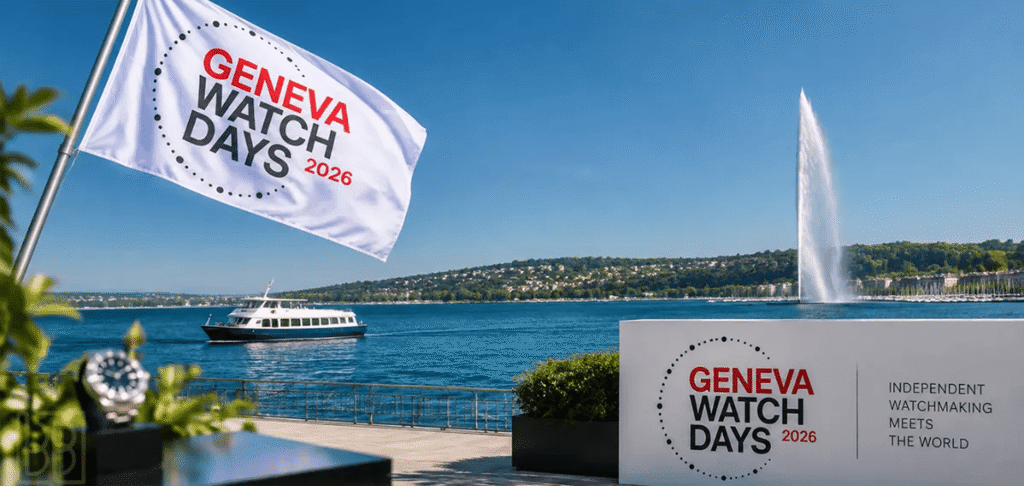
The most interesting watch a serious collector buys in 2026 may not have the most recognizable logo in the room. It may have the most interesting story. Independent watchmaking has moved from a niche conversation among specialists to a genuine priority for collectors at the upper end of Dubai’s pre-owned market. Geneva Watch Days 2026, running 2 to 6 September and featuring approximately 70 brands, has made this visible at scale: the most discussed launches include golden obsidian minute repeaters, hand-hammered dials, ultra-thin movement experiments, and titanium case forms that no large-volume manufacturer would have committed to. This guide explains what independent watchmaking actually means, why it is attracting Dubai collectors who already own Rolex, Patek, and AP, and what to understand before entering that part of the market.
What independent watchmaking actually means
The term is used loosely and warrants precision. An independent watchmaker, in the collector’s sense, is a brand or maker that produces watches in genuinely limited numbers, controls most or all of its movement production in-house, and makes design and technical decisions driven by horological conviction rather than commercial volume. Independent brands typically have annual production measured in the hundreds or low thousands of pieces, rather than in the hundreds of thousands.
The practical differences when buying a major-brand piece are real. An independent watch is harder to source, which is both a challenge and part of its appeal. Service may require sending the piece back to the manufacturer, which takes longer than servicing a Rolex through a regional service center. Resale liquidity is narrower because the buyer pool is smaller, though, with the right reference from the right maker, that pool can be deeply committed and willing to pay premiums that broad-market buyers cannot match.
The watch itself is usually different in character as well. Without the commercial pressure to produce tens of thousands of examples, an independent maker can use a case form that takes longer to machine, a dial material with no reliable replacement, or a movement complication that serves no practical purpose but is technically extraordinary. These choices are why collectors pay attention.
What Geneva Watch Days 2026 is showing
The September 2026 edition of Geneva Watch Days includes approximately 70 brands, many of them independent or smaller maisons that use the event as their primary annual showcase. The most discussed pieces as of the opening days reflect the directions that independent watchmaking is currently exploring.
The Gérald Genta golden obsidian minute repeater is one of the most technically and visually ambitious pieces shown. A minute repeater, which chimes the hours, quarter hours, and minutes on demand using tiny hammers and gongs within the movement, is one of the most complex and expensive watch complications to produce. Placing that complication inside a 40mm yellow gold case with a golden obsidian dial, a material that changes character entirely depending on the angle of light striking it, represents the combination of technical depth and material experimentation that independent watchmaking does best.
Gérald Charles, which occupies a position as a high-design independent with technical credibility, showed three Masterlink Atelier editions with hand-hammered Maillechort dials. Maillechort is a silvery nickel-brass alloy that takes a hand finish differently from standard dial metals, producing a surface that catches light in an almost textile way. The pieces represent the kind of dial experimentation that tends to appear in independents first, then migrate to the larger houses years later, once the collector market has validated the direction.
Bulgari, which sits at an interesting position between large-house commercial volumes and independent-like technical ambition in its Octo Finissimo line, continued to develop ultra-thin movement work through design collaborations. The Vianney Halter collaboration referenced at Geneva Watch Days places Bulgari in a conversation normally reserved for independents.
Why are Dubai collectors with Rolex, Patek, and AP looking further
A collector who has spent five to ten years acquiring core references, a Submariner, a Nautilus, a Royal Oak, has reached a point where the next logical piece is either another blue-chip reference or something that opens up a genuinely different part of the hobby. For a growing number of Dubai buyers, that second path is more interesting than the first.
The dynamic has a simple logic. The collector who already owns a Nautilus 5711 and a GMT-Master II Pepsi has covered the most recognized references in two of the most followed brands. Adding a third Rolex or a second Patek does not expand the collection’s range of character or conversation. Adding an F.P. Journe Chronomètre Bleu, an H. Moser Streamliner, or an MB&F LM Sequential does.
This is not a rejection of Rolex, Patek, or AP. Those references still anchor the collections of serious Dubai buyers and continue to perform as the most liquid and most globally understood pieces at resale. The shift is additive. The collector is not selling their blue-chip pieces to fund independent purchases. They are adding a different layer on top of an established foundation.
Dubai’s collector community has also matured in ways that support this shift. The HNW buyers who entered the watch market from 2015 to 2018 are now ten years into the hobby. Their knowledge has grown, their reference points have widened, and their appetite for the story behind a piece has increased. Independent watchmakers tend to have more distinctive stories than large houses, an asset for a collector who has heard the Rolex narrative many times and is looking for something less familiar.
The makers are worth knowing
This is not a comprehensive ranking. It is a selection of independent makers that come up most often in serious collector conversations across Dubai’s pre-owned market, Geneva Watch Days coverage, and the broader high-horology community in 2026.
F.P. Journe
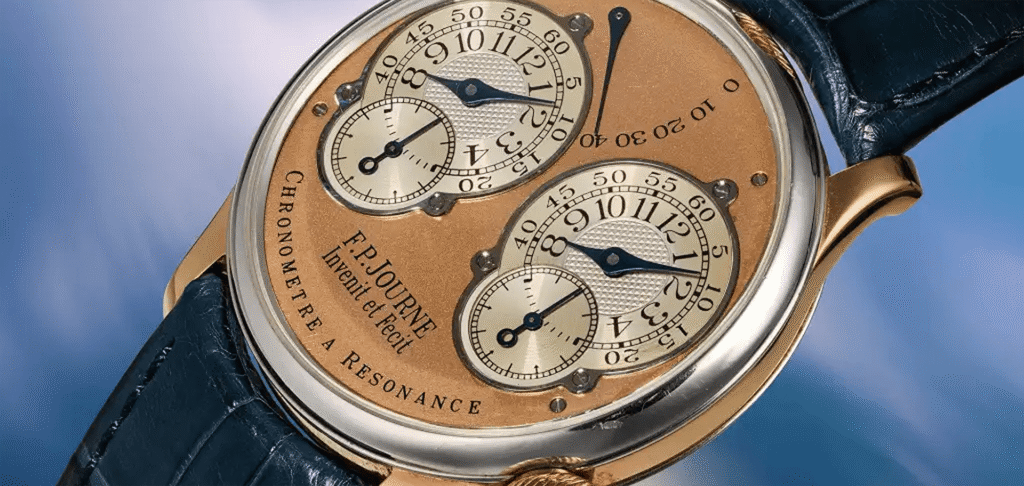
François-Paul Journe is possibly the most respected living independent watchmaker in terms of collector demand for his work. His Geneva manufacture produces watches in very small numbers across a range of complications and styles, including the Chronomètre Bleu, the Tourbillon Souverain, and the Sonnerie Souveraine minute repeater. What distinguishes Journe’s work, technically, is his continued use of movements based on 18ct rose gold, which he values for its stability and finishing quality.
In the secondary market, Journe pieces have shown strong value retention and, in some cases, significant appreciation for discontinued or rare references. Liquidity is narrower than a Rolex or Patek because the buyer pool is smaller, but the buyers who want Journe are specifically committed to his work, which creates a different kind of market depth.
Sourcing Journe in Dubai requires specialist knowledge because pieces are rarely in retail channels. This is one of the clearest use cases for the WatchX Watch Concierge, which handles sourcing requests for specific independent references that are not in general circulation.
H. Moser and Cie
H. Moser sits in an interesting position: technically rigorous, design-led, and more commercially accessible than some independents due to its production volumes and retail network. The Streamliner family, with its integrated bracelet and cushion-case form, has attracted buyers who want something structurally similar to a Nautilus or a Royal Oak but with a less saturated collector market and more individual design.
Moser has also made a deliberate point of producing “Vantablack” fumé dials and unusual smoked dial treatments that are visually distinctive without resorting to stone or meteorite. The Funky Blue, Burgundy, and Pioneer dials have generated significant collector attention. Moser pieces appear in Dubai’s pre-owned market with some regularity because the brand has a growing GCC buyer base.
MB&F
Maximilian Büsser and Friends produce pieces that occupy a category of their own. The Legacy Machine and HM (Horological Machine) families are explicitly experimental: they look nothing like conventional watches, feature visible, floating balance wheels, and, in some cases, suspend the movement architecture in ways that challenge what a watch case is supposed to contain. This is not for every collector, but for the buyer who has exhausted the conventional watch conversation, MB&F opens a different kind of interest.
Secondary market liquidity for MB&F is narrower than for the blue-chip brands, but the buyer pool is dedicated. Pieces in good condition with documentation tend to find buyers faster than less well-known independents because MB&F has a global community of committed collectors.
Czapek
Czapek has revived a nineteenth-century Geneva watchmaking name with modern production standards and a deliberately refined aesthetic. The Quai des Bergues and Antarctica families use movements partly produced in-house, with a visual style that is closer to classical Swiss watchmaking than the experimental direction of MB&F. For Dubai collectors who want an independent with a longer historical narrative, Czapek is a natural consideration.
Laurent Ferrier
Laurent Ferrier’s work is for the collector who values movement finishing and visible craftsmanship above almost everything else. His galet (pebble-shaped) cases and manually wound movements with high-polish beveling on every component address a specific kind of buyer: one who understands movement finishing well enough to evaluate what Ferrier’s team achieves and is willing to pay for it.
Production numbers are very low. Secondary market appearances are rare. This is not a liquid investment, but it could be a significant collectible for a buyer who understands what they are acquiring.
What to understand before entering the independent watch market
Production numbers matter more than they do with major brands. A Rolex Submariner, produced in tens of thousands of units per year, has global market depth that supports consistent liquidity. An independent edition produced in fifty pieces has a fundamentally different secondary market. Before buying, understand the production context.
Service access needs consideration. Major brand watches can be serviced through authorized service centers in Dubai and across the GCC. Independent watches often need to be returned to the manufacturer, which can take longer and may involve additional logistical steps. This is a practical reality, not a disqualifying factor, but it should be part of the buying decision.
Do not confuse rarity with value. An obscure watch produced in low numbers is not automatically valuable in the secondary market. Collector demand determines secondary market price, not scarcity alone. The independents with the strongest secondary market records, F.P. Journe being the clearest example, have that standing because a global community of informed collectors has validated their work over many years, not because they produce few pieces.
Provenance and documentation are essential. This applies to all pre-owned watches, but it holds particular weight in the independent market because the buyer pool is smaller and more knowledgeable. A serious independent collector will scrutinize documentation more carefully than a buyer of a mainstream reference who can verify the watch against widely available information. Box, papers, and service history are not optional for independent pieces.
Authentication is a specific skill. Identifying a genuine F.P. Journe from a sophisticated reproduction or verifying a rare Czapek configuration requires specialized expertise. The WatchX authentication service and the Watch Concierge both operate with this knowledge base for buyers considering independent pieces.
Liquidity is narrower, and that is a real consideration. If buying with any regard for future liquidity or realizable value, understand that an independent piece may take longer to sell than a blue-chip reference, and the realistic buyer pool is smaller. This does not make them poor purchases, but it changes the liquidity calculus compared to a Submariner or a Nautilus.
How to start if you are already a Rolex or Patek collector
The most natural entry point for a Dubai collector already holding blue-chip references is an independent that shares architectural DNA with what you already own, without being the same thing.
If you own a Patek Nautilus and are interested in the integrated-bracelet sports-watch aesthetic, H. Moser’s Streamliner occupies similar visual territory, with a different story and a less saturated buyer community.
If you own an AP Royal Oak and are interested in movement architecture visible through the dial, MB&F’s Legacy Machine No. 1, with its visible flying balance wheel, offers a different and more explicit version of the same impulse.
If your collection is anchored in classical round watches on leather straps, F.P. Journe is the most direct expansion: his Chronomètre Bleu or Tourbillon Souverain sits within a recognizable formal watch tradition while offering technically extraordinary movements.
If your interest is in materials and craftsmanship rather than technical complexity, Gérald Charles and Czapek both offer strong dial work and movement finishing within relatively accessible (by independent watchmaking standards) price ranges.
The Watch Concierge at WatchX handles sourcing for specific independent references and can advise on which makers currently have pieces in or accessible to Dubai’s market.
Frequently asked questions
What is an independent watchmaker?
An independent watchmaker produces watches in limited numbers, typically controls its movement production in-house or through closely managed specialist workshops, and makes design decisions based on horological craft rather than commercial volume targets. The term distinguishes these makers from large-scale manufacturers that produce watches across many brands. Examples include F.P. Journe, H. Moser, MB&F, Czapek, Laurent Ferrier, De Bethune, and Gérald Charles.
Are independent watches a good investment?
Some independent watches have shown significant secondary market appreciation over time. F.P. Journe is the most frequently cited example in collector circles, with certain discontinued references appreciating substantially. However, independent watchmaking is not uniformly a financial investment. Production numbers, collector demand, brand reputation, condition, and documentation all affect secondary market values, and those values can be harder to predict for independent pieces than for established blue-chip references. Buy an independent because you want the piece, not because you expect it to appreciate.
How do independent watches compare to Rolex and Patek Philippe?
The comparison is not straightforward because they serve different collector purposes. Rolex and Patek Philippe offer deep global liquidity, established collector communities, and verifiable price benchmarks. Independent watches offer greater individuality, more direct access to the maker’s technical philosophy, and a collector experience that is less mediated by mainstream market dynamics. Most serious Dubai collectors who own independents also own blue-chip references. They are additive rather than alternative.
Where can I buy independent watches in Dubai?
Independent watch sourcing in Dubai requires specialist channels because most independents are not available through standard retail networks in the region. The WatchX Watch Concierge service handles sourcing requests for specific independent references. Pre-owned independent pieces also appear periodically in Dubai’s specialist market.
Are F.P. Journe watches available in Dubai?
F.P. Journe does not have a widespread retail presence in the UAE, and pieces are not commonly found in general pre-owned stock. Sourcing requires specialist dealer relationships. WatchX can assist buyers with a specific Journe reference through the Watch Concierge service.
Do independent watches hold their value?
Value retention varies significantly by maker and specific reference. F.P. Journe’s most sought-after references have shown strong performance in the secondary market. Other independents vary considerably. The factors that predict better retention are the same as for any pre-owned watch: strong underlying maker reputation, low production numbers, intact documentation, excellent condition, and collector demand for the specific piece. Narrow liquidity means the secondary market for independents is less forgiving of poor condition or incomplete documentation than the broader blue-chip market.
What should I know about servicing an independent watch?
Most independent watches need to be returned to the manufacturer for service, which takes longer than servicing a major-brand watch at a regional center. Service intervals and costs also vary by maker. F.P. Journe recommends service every five to seven years. Some independents use modified versions of established ebauche movements, which can be serviced by qualified watchmakers without returning to the manufacturer. Understanding the service situation before buying is part of the due diligence for any independent purchase.
WatchX is a certified pre-owned luxury watch dealer based in JLT, Dubai. WatchX is not an authorized retailer for any brand referenced in this article. This article does not constitute investment advice.
The most interesting thing happening to luxury watches in 2026 is not a new movement architecture or a technical milestone. It is the dial. Natural stone, golden obsidian, hand-hammered metal, lacquered green, aventurine, meteorite: material and texture have become the defining conversation at both Watches and Wonders 2026 and Geneva Watch Days. But the right collector question is not which dial is trending. It is whether the watch underneath the dial is worth owning regardless of what the dial is doing. This guide works through what the trend actually means, which dial choices are worth taking seriously, and the five questions every Dubai buyer should ask before paying a premium for an unusual face.
Why collectors are moving from hype to texture
There is a pattern that repeats in the luxury watch market about every five to seven years. A category becomes oversubscribed, prices peak, and a portion of the collector market begins looking for something more personal. After the steel sports watch cycle of 2018 to 2022, a portion of serious collectors has moved toward pieces that feel individual rather than immediately recognisable.
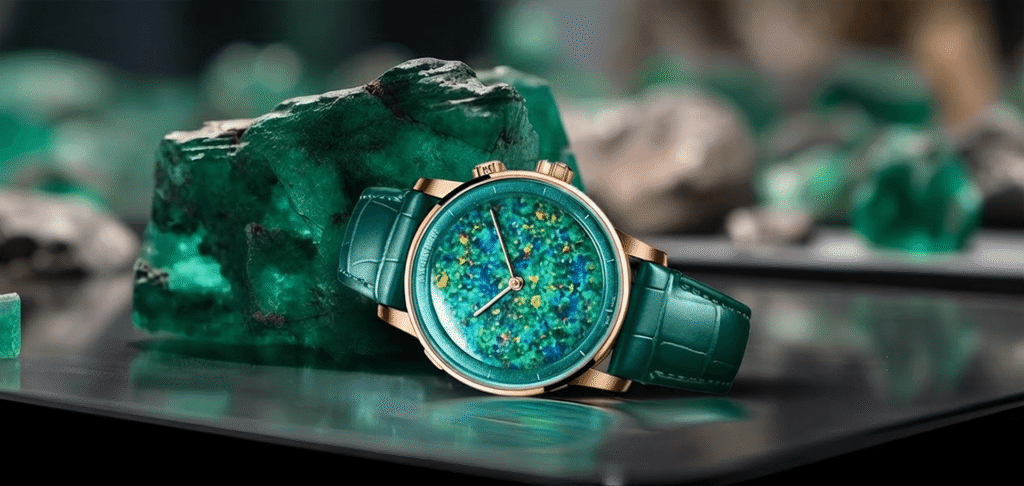
Stone dials and textured surfaces serve that interest directly. A malachite dial does not look like any other malachite dial. Natural stone varies by formation, colour distribution, and veining in ways that cannot be perfectly replicated. The same is true for meteorite, tiger’s eye, and aventurine. When a collector owns one, they own something genuinely singular, which is increasingly rare in a market where high-volume production has made many references feel interchangeable.
This move toward material individuality is also a response to maturity in the buyer base. The Dubai collector who bought their first Submariner in 2015 and their first Nautilus in 2019 is now on their fourth or fifth piece. They have graduated from “which brand” to “which specific configuration,” and a distinctive dial is a strong answer to that latter question.
What the 2026 watch fairs are showing
Geneva Watch Days, running 2 to 6 September 2026, has been the clearest single event for this trend. Among the most discussed pieces are a Gérald Genta golden obsidian minute repeater in 40mm yellow gold, three Gérald Charles Masterlink Atelier editions with hand-hammered Maillechort dials, and continued Bulgari movement in ultra-thin design with texture-forward finishes.
The golden obsidian minute repeater from Gérald Genta illustrates why independents often lead this kind of experimentation. Large brands need commercial volumes that constrain how unusual they can make a dial. A smaller maker can use a material like golden obsidian, which has optical depth that changes completely depending on the angle of light, because they are producing in limited numbers for buyers who are specifically seeking that kind of individuality.
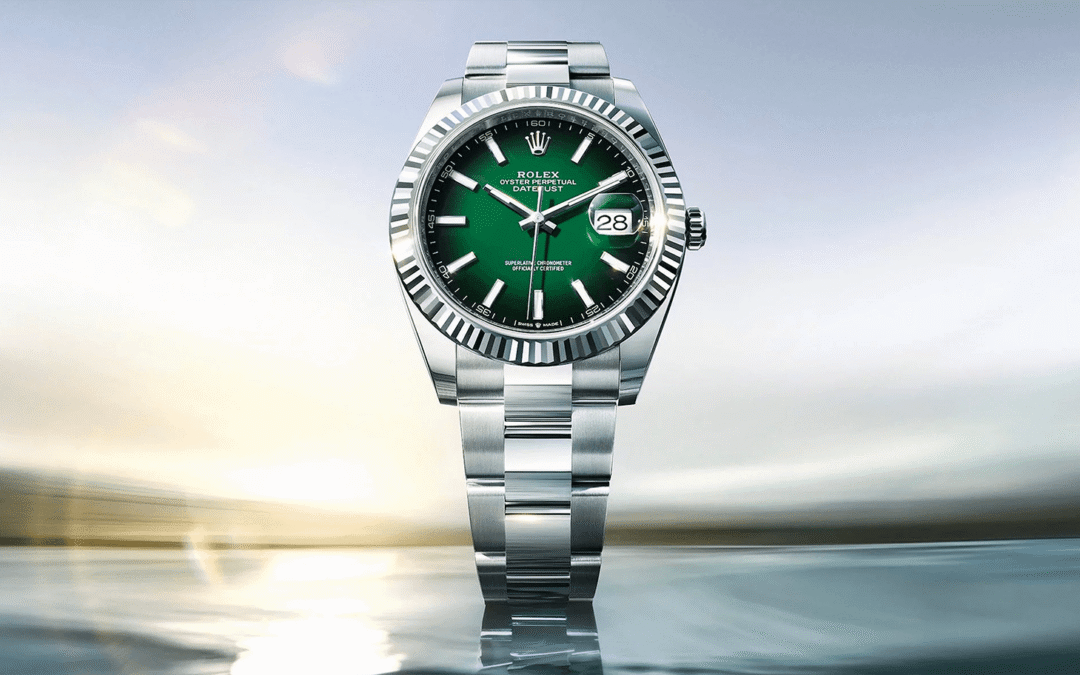
Watches and Wonders earlier in 2026 showed the major houses moving in the same direction, though with characteristic caution. Rolex’s green ombré lacquer dial on the Datejust 41 is the most significant example: it is technically complex, requires a lacquering process that has been refined since the ombré technique returned in 2019, and represents a meaningful statement from a brand that changes dial treatments rarely and deliberately.
Patek Philippe and Audemars Piguet have both extended their hard enamel and tapisserie dial programs, confirming that texture is not a passing novelty but a genuine direction the industry’s most established makers are committing to for the medium term.
Stone dials explained
A stone dial is exactly what the name suggests: a watch dial cut, shaped, and finished from a natural mineral rather than a manufactured metal or lacquer base. The most common stones used in high watchmaking include malachite, lapis lazuli, onyx, aventurine, tiger’s eye, meteorite, turquoise, and hardstone composites. More unusual examples include golden obsidian, sodalite, and sunstone.
What makes stone dials different from other unusual dials is inherent variation. No two pieces of malachite have the same green swirl pattern. No two slices of meteorite show the same Widmanstätten crystalline structure. This means that when a watchmaker produces a stone dial edition of even five hundred pieces, each piece is individually distinct in a way that painted, lacquered, or printed dials are not.
There are practical considerations buyers should understand. Stone dials are more fragile than metal dials. A sharp impact that a metal dial absorbs can crack a stone dial. This does not make stone dial watches unwearable, but it is a reason to think about how and where you wear the piece. Stone dials also cannot be perfectly matched if damaged: a replacement dial cannot be cut from an identical piece of stone, which affects both the cost and possibility of dial restoration.
The fragility argument is often overstated by buyers who are hesitant about stone dials. A watch worn with normal care in professional and social settings faces very little risk. The consideration is more relevant for buyers thinking about an active daily wear piece that will encounter hard surfaces regularly.
Green is no longer a trend colour
Green entered the luxury watch conversation as a fashion moment around 2019 and 2020. In most categories, a colour that enters as a trend exits within two to three years. Green in luxury watches has not followed that pattern.
The reason is that green absorbed into the DNA of the references that wore it. Rolex green has specific associations with Oyster Perpetual models that created genuine collector demand. The Submariner “Starbucks” with its green bezel insert became one of the more liquid references in Rolex’s lineup. The GMT-Master II “Sprite” with its black and green cerachrom bezel has traded at premiums that confirm collectors are not treating it as a novelty.
Rolex’s 2026 Datejust 41 with a green ombré lacquer dial extends that logic. An ombré dial, where the colour graduates from deep at the centre to lighter at the edge or vice versa, is technically more demanding than a flat colour dial because the lacquering process requires precise control across the full surface. Rolex does not introduce this kind of technical variation unless they intend it to define the reference, which is a reasonable signal for buyers evaluating long-term dial desirability.
The collector verdict on green as a sustained colour is now reasonably clear: it has moved from trend to established. That does not mean every green dial watch is a strong purchase. It means the green dial question has graduated from “is this a passing colour” to the more relevant “is this specific reference, in this specific condition, a strong buy.”
The five questions to ask before paying a premium for a distinctive dial
These questions apply equally to a stone dial, an ombré lacquer, a meteorite face, or any dial treatment that carries a price premium over the standard reference.
1. Is the reference desirable even without this dial?
A distinctive dial can add genuine value to a strong reference. It cannot rescue a weak one. If the base watch, stripped of its unusual face, would not be a compelling purchase in its standard configuration, the dial is covering for underlying weakness rather than adding to underlying strength. Start with the reference. Evaluate the dial second.
2. Is the dial factory original?
Aftermarket dial modifications exist across the watch market and are especially prevalent in references where an unusual dial creates a significant price premium. An aftermarket modification can involve replacing a standard dial with a stone or lacquered surface, or applying treatments to an original dial that were not part of the manufacturer’s specification. The practical test is authentication: any unusual dial should be verifiable against the watch’s serial number, papers, and manufacturing period. WatchX inspects dial originality as part of its standard pre-purchase process, and the authentication service is available for buyers who want an independent assessment.
3. Is the dial production limited or merely new?
A stone dial on a new reference from a major house is not automatically scarce. Some stone dial editions run to hundreds of pieces. Others are genuinely limited to double-digit numbers. The distinction matters because scarcity is one of the drivers of secondary market premium. A stone dial edition of five thousand pieces will be traded very differently from a stone dial edition of fifty. Find out the production numbers before attributing rarity value to any specific dial.
4. Does the watch come with correct papers, service history, and condition?
This applies to every pre-owned watch, but it applies with extra weight to unusual dial pieces because the dial premium is meaningful and the provenance of that premium needs to be verifiable. A stone dial Rolex or Patek without papers is not only harder to sell: it is harder to authenticate as a genuine factory configuration, which is the fundamental question for any buyer paying above the standard reference price.
5. Can you live with this dial after the launch excitement fades?
This is the question that separates collectors from buyers who are following coverage. A stone dial that reads clearly at a normal arm distance, does not require explanation, and functions as a daily or regular-wear piece is a different long-term proposition from a stone dial that works as a photography subject but reads as confusing in person. Look at the watch in a normal indoor light setting, not only in the launch imagery. The launch photographs are shot to maximise the stone’s drama. Your wrist is not a studio.
Which dial types are likely to age best
This question cannot be answered with certainty, and any guide that offers guarantees about future collector values should be read with scepticism. What can be offered is a framework based on observable patterns in the pre-owned market.
Classic hardstones on established precious metal references have shown consistent long-term collector interest. A malachite dial on a yellow gold Patek or an onyx dial on a white gold Rolex can be found in historical auction results that reflect sustained demand across multiple decades. The combination of material rarity, precious metal case, and strong underlying reference creates multiple layers of desirability that tend to hold.
Dial colours tied to a historically significant reference accumulate collector interest over time. The Paul Newman Daytona dial was not considered especially desirable in the decades after it was produced. Collector attention built slowly, then dramatically. This does not mean every unusual historical dial will follow the same path, but it demonstrates that time and collector focus can build value in references that were initially unremarkable.
Understated textures on recognisable models tend to age better than loud novelty treatments on the same models. A brushed sunray dial, a hand-guilloche surface, or a deep lacquer finish with restrained colour on a well-known reference accumulates desirability because it adds craft without departing from the character of the watch. Loud novelty treatments can create initial hype and then become period pieces in a way that limits their long-term appeal.
Limited editions with transparent production numbers and genuine technical or material distinction age better than marketing-led editions where the limitation is stated but not meaningfully connected to the dial’s qualities.
Which dial choices require more caution
Trend colours without a strong underlying reference are the clearest caution zone. A colour that entered the market because a single brand made it popular, applied to a reference that has no particular collector standing on its own, is not a reliable purchase on investment grounds. Enjoy it for aesthetic reasons if it appeals, but price it accordingly.
Aftermarket modified dials are a risk that is disproportionately common in the stone dial and unusual dial category because the modification can be visually compelling and the premium significant. If you cannot verify the provenance of the dial treatment through papers, serial number correlation, and inspection, the dial should be priced as a standard reference until it can be verified.
Non-factory stones applied to otherwise standard references are a related risk. A watch that has had its original dial replaced with a stone surface has its value as a factory watch significantly affected. It can be an appealing object, but it is not the same commercial proposition as a factory stone dial configuration.
Watches where the price premium is not explained by scarcity, underlying reference quality, material rarity, or documented collector demand are the general caution. If the sole argument for a premium is “this dial is popular right now,” that is the least durable of all the reasons to pay more.
How this plays out in Dubai’s pre-owned market
Dubai buyers encounter more unusual pre-owned pieces than buyers in most other markets because the city’s concentration of wealth and its position as a trading hub means that globally scarce references circulate here more frequently than in smaller or more restricted markets. That is an advantage, but it comes with a corresponding responsibility to evaluate what you are seeing correctly.
The practical guidance for Dubai buyers considering an unusual dial piece in the pre-owned market:
Check dial originality specifically, not only general condition. A watch that looks correct in photographs can have a non-factory dial that only becomes apparent on close inspection or under watchmaker’s tools.
Compare the exact reference. A Rolex Datejust with a meteorite dial on a steel bracelet is a different secondary market proposition from the same dial configuration on a gold Oyster band. The bracelet, case material, and reference year all affect value in ways that are sometimes larger than the dial itself.
Request authentication, not only inspection. Inspection confirms condition. Authentication confirms that the dial configuration is genuine and corresponds to the watch’s original specification. The two are different services.
Consider the future resale audience before paying a significant premium. An unusual dial watch is not universally desirable. Some buyers specifically want unusual dials. Many buyers want the standard configuration of a reference. If you pay a significant dial premium, understand that your future buyer also needs to see the value in that specific configuration.
The full pre-owned collection at WatchX is inspected and priced with dial originality confirmed as part of the standard process. For buyers evaluating a specific unusual dial piece elsewhere, the WatchX authentication service provides independent assessment.
Frequently asked questions
Are stone dial watches trending in 2026?
Yes. Stone dials were among the most discussed features at both Watches and Wonders 2026 and Geneva Watch Days 2026. Materials including golden obsidian, malachite, aventurine, and meteorite appeared across multiple brands and price categories. The trend reflects a collector interest in individuality and craft rather than a single seasonal colour preference.
What is a stone dial watch?
A stone dial watch uses a slice of natural mineral, cut and shaped to fit the watch case, as the dial surface instead of a manufactured metal or lacquer base. Common stone types used in high watchmaking include malachite, lapis lazuli, onyx, meteorite, aventurine, and tiger’s eye. Because natural stone varies inherently, no two stone dial watches are identical even within the same reference edition.
Do stone dial watches hold their value?
Value retention depends on the underlying reference, the production numbers of the stone dial edition, dial originality, condition, and documentation. Classic hardstones on established precious metal references from Rolex, Patek Philippe, and Audemars Piguet have historically shown strong secondary market interest. Stone dial treatments on references with limited independent collector standing are not guaranteed to retain a price premium after launch attention fades. Condition of the stone dial itself is particularly relevant because damage to a natural stone dial cannot be easily repaired or matched.
Are green dial watches still popular in 2026?
Yes. Green has demonstrated unusual staying power as a luxury watch colour. Rolex’s 2026 green ombré lacquer Datejust 41, the continued trading strength of references like the Submariner “Starbucks” and the GMT-Master II “Sprite,” and Patek Philippe’s extensions of green dial variants all confirm that green has moved from trend colour to established palette. That said, the reference matters more than the colour: a green dial on a strong reference is a different proposition from a green dial on a weak one.
How do I know whether a luxury watch dial is original?
Dial originality can be verified through a combination of methods: correlating the dial configuration with the watch’s serial number and manufacturing period, checking against the original papers where available, and having the watch inspected by an experienced watchmaker who can assess whether the dial condition, printing, and finishing are consistent with factory specification. Aftermarket dial modifications are sometimes very well executed and not identifiable without professional examination.
Are aftermarket dials bad for resale value?
Yes, significantly. A watch with an aftermarket modified dial is not the same collector proposition as a factory original configuration, even if the aftermarket dial is technically superior in some respects. Buyers who specifically want factory original configurations, which is most serious collectors, will price a non-factory dial as a deduction from standard reference value rather than as an addition. The premium paid for an unusual aftermarket dial is typically not recoverable in the secondary market.
Which Rolex dial colours are most collectable in 2026?
The most reliably collectable Rolex dial colours in Dubai’s pre-owned market are those tied to specific established references with a history of collector demand: Submariner black and green, GMT-Master II red and blue (Pepsi), black and blue (Batman), and black and green (Sprite). Among less common dial treatments, the Datejust’s range of sunburst and ombré dials in steel or gold references with desirable bracelets have shown increased collector attention. The newer green ombré lacquer Datejust 41 from 2026 is generating interest but is too recent to have an established secondary market track record.
Should I pay more for a rare dial watch in Dubai?
Only if the premium is justified by the specific combination of reference quality, dial originality, production scarcity, condition, and complete documentation. A rare dial on a weak underlying reference, or a dial claimed to be rare without verifiable production information, is not a reliable basis for a price premium. Dubai’s pre-owned market is active and competitive: genuinely rare factory configurations are available, but so are pieces where the pricing reflects hype rather than substance.
WatchX is a certified pre-owned luxury watch dealer based in JLT, Dubai. WatchX is not an authorised retailer for any brand referenced in this article.