The smaller watch shift in 2026 is not a reaction to trends or social media. It is a correction driven by collectors who have spent years wearing large sports watches and have quietly decided they want something different. Across Watches and Wonders 2026 and Geneva Watch Days, the most discussed launches were not in the 42mm to 44mm range. They were at 35mm, 37mm, and 39mm. Brands that have built reputations on oversized cases are introducing more compact references because the buyers are asking for them. This guide explains what is driving that shift, which references make sense for different buyers in Dubai, and how to choose a size that works for the way you actually live.
The era of bigger being better is ending
For roughly fifteen years, the dominant logic in luxury watch buying was more size, more presence, more dial. A 44mm Royal Oak Offshore read as ambition. A 42mm Submariner Date read as taste made visible. In Dubai, where watches operate partly as social signals in high density luxury environments, that logic had real commercial pull.
That pull is weakening. It is not disappearing, but the category of informed buyer has shifted. The collectors who drove the oversized sports watch market in its peak years between 2018 and 2022 are now, in many cases, the same people buying quieter, better proportioned pieces. They have already owned the statement. Now they want something that lives on the wrist rather than announces it.
The correction is visible in the secondary market too. Not in collapsing prices for the classic references, which remain strong, but in a broadening of what sells well. The RolexDatejust 36, the Cartier Santos Medium, the smaller Patek Nautilus variants, the 37mm Royal Oak versions: all of these are trading with increased activity in Dubai’s pre-owned market in 2026.
What the 2026 watch fairs are telling us
Geneva Watch Days, running from 2 to 6 September 2026, has reinforced the trend at an industry level. Among the most discussed launches are a Bulgari Octo Finissimo at 37mm, a Gérald Charles Masterlink Atelier in 38mm, and a new Bremont Terra Nova Jumping Hour at 35mm. These are not the same brand making a smaller version of an existing watch. They are three different makers, across different market positions, all arriving at a compact diameter as the right expression for 2026.
Watches and Wonders earlier in the year told a similar story. The major houses were not introducing larger references as headline pieces. They were introducing refinement: new movements in existing cases, new dials on proven proportions, and a return to case shapes that prioritise how a watch wears rather than how much space it takes on the wrist.
This is a meaningful industry signal. When both the established brands and the independent makers at Geneva Watch Days are moving in the same direction, the question is no longer whether the trend is real. It is what to do with it.
Why this matters specifically in Dubai
Dubai collectors operate across more contexts per day than buyers in most other cities. The morning might be a business meeting in DIFC. Lunch is a client hospitality setting. The afternoon involves travel. The evening is a social dinner or a family occasion. The watch on the wrist needs to work across all of those without being a decision each time.
A 42mm Submariner with a rubber bezel insert is a strong choice for some of those contexts and a noticeably wrong one for others. A 36mm Datejust in steel slides under a shirt cuff, photographs without dominating, works in a formal restaurant without creating a conversation you did not want, and travels without the self-consciousness of wearing something that demands attention.
The heat argument is also real, though it is not absolute. Steel bracelets in Dubai summers are not impossible, but they are not comfortable either. Lighter, more compact watches in leather, rubber, or fabric options become more appealing in a climate where your watch is on your wrist in 40-degree heat for months of the year.
None of this means the Submariner or the Offshore is the wrong watch. It means the compact watch earns its place differently, and more Dubai buyers are now building collections that include both.
The best compact references for different buyers
The buyer who wants one Rolex for everything
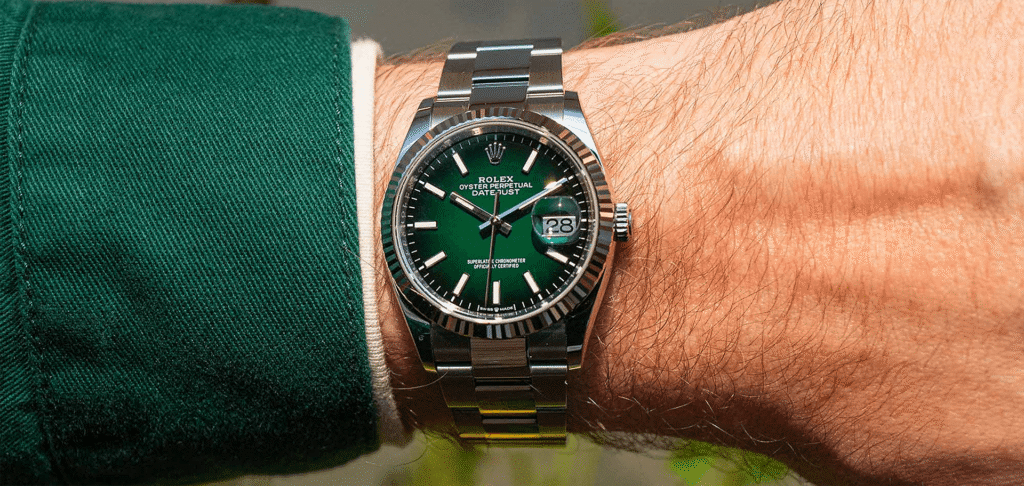
Rolex Datejust 36
The Datejust 36 is probably Rolex’s most balanced proportion. It is not a field watch, not a dress watch, and not a sports watch. It is a watch that does not require categorisation. The 36mm case sits cleanly on most wrists, the Jubilee bracelet adds just enough formality, and the range of dial options means buyers can choose something restrained or something with a bit of personality.
Against the Datejust 41, the 36 reads as more considered, less casual, and more versatile across dress contexts. The 41 has more visual weight and a slightly sportier personality because of the larger case and longer lugs. Neither is universally right. The choice comes down to whether the buyer wears this watch primarily in professional settings or in more relaxed ones. For professional daily wear in Dubai, the 36 usually wins the argument.
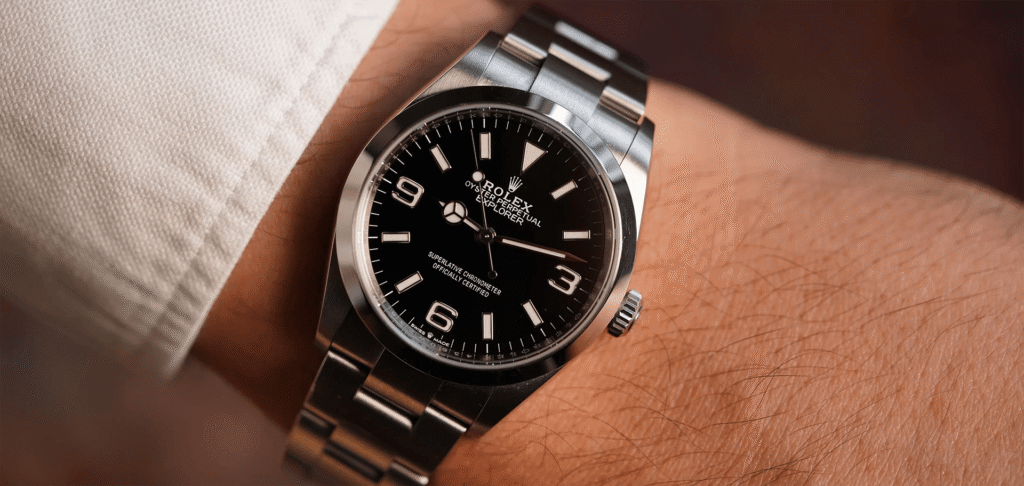
The Explorer 36, in its current 124270 iteration, is a quiet collector piece that often gets overlooked by buyers focused on the GMT-Master II or the Submariner. It has a 36mm Oyster case, no date complication, and one of Rolex’s clearest dial designs: black, with 3, 6, and 9 in Arabic numerals and a seconds hand in orange on some references. There is nothing surplus to the design.
For the buyer who wants Rolex recognition without the visual weight of a Submariner, and without the GMT buyer’s wait list conversation, the Explorer 36 is a strong argument. It trades well in the secondary market and rarely suffers from the extreme price volatility that the more popular references see.
The buyer who wants quiet luxury
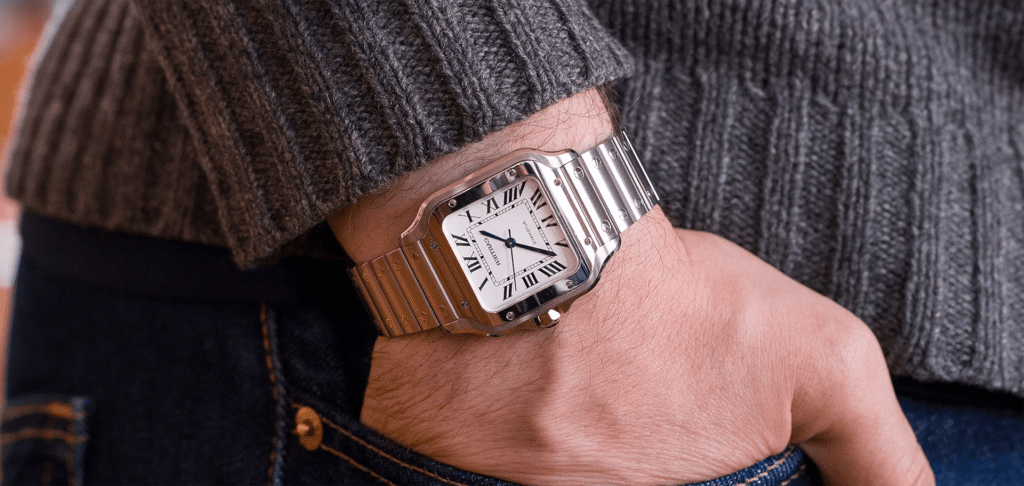
Cartier Santos Medium
The Cartier Santos Medium is one of the most underrated compact luxury watches available in Dubai’s pre-owned market. Its square case means it wears larger than the diameter suggests, because the case occupies more horizontal wrist space than a round watch at the same measurement. A Santos Medium at 35.1mm reads on the wrist more like a 38mm round watch.
The Santos is also historically significant. It was designed in 1904, making it the first purpose-built wristwatch. That context matters for buyers who want something with depth behind it. In pre-owned form, a Santos Medium in steel in excellent condition with papers can be found at a price point that represents genuine value against the current retail.
Cartier Tank Louis
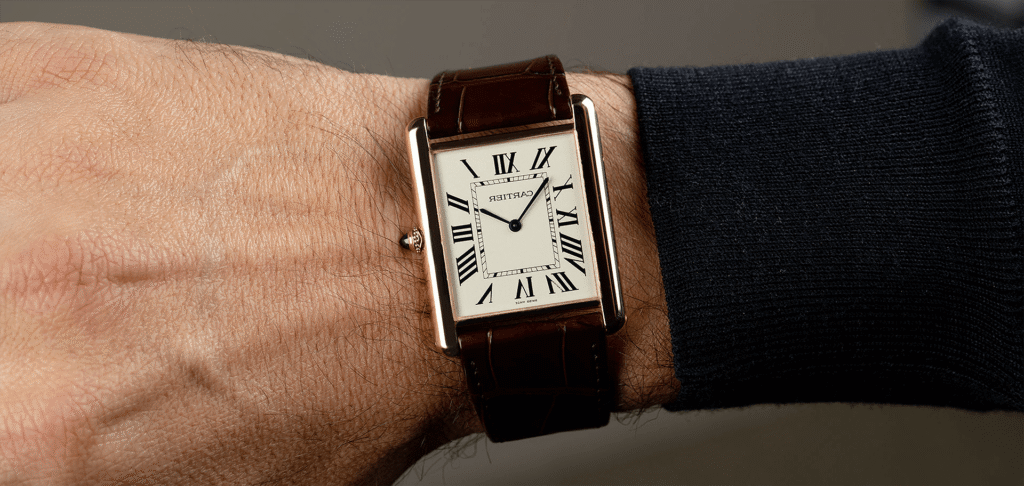
The Tank occupies a different position. It is a dress watch, not a daily sport or professional piece, but it belongs in this conversation because it demonstrates why diameter alone does not determine the character of a watch. A Tank Louis at 33mm can have more visual authority on a suited wrist than a 42mm sports watch that reads as off-register in a formal context.
For the buyer who wants to make a considered choice rather than an obvious one, the Tank is worth serious attention. The Cartier collection at WatchX includes both Santos and Tank references.
The buyer who wants an integrated bracelet watch
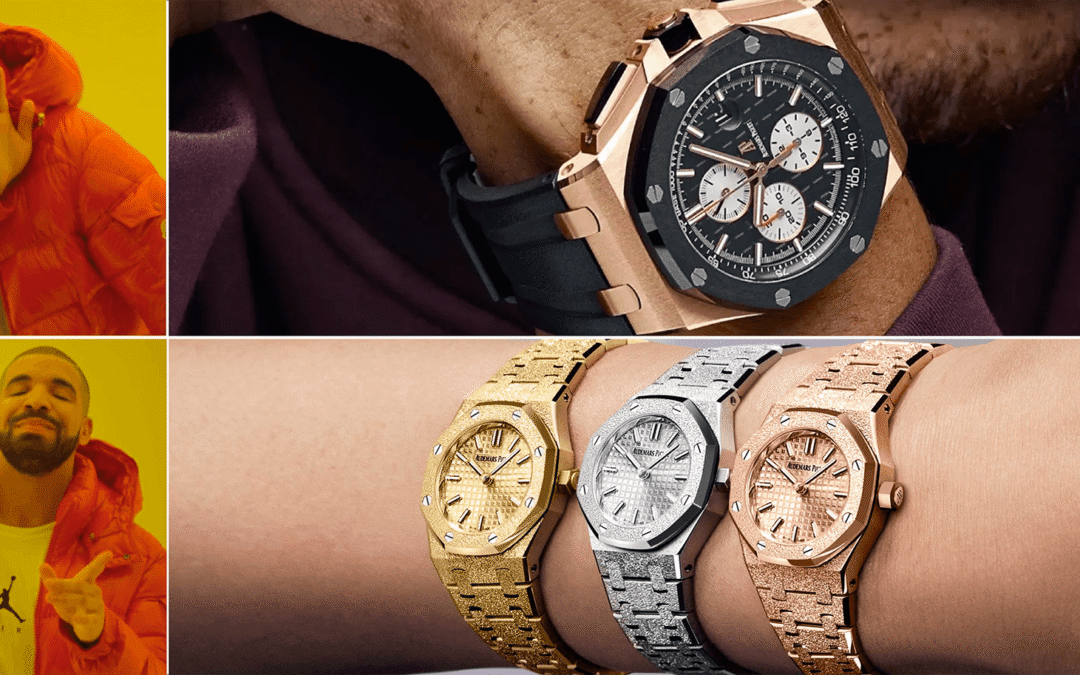
Audemars Piguet Royal Oak 37mm
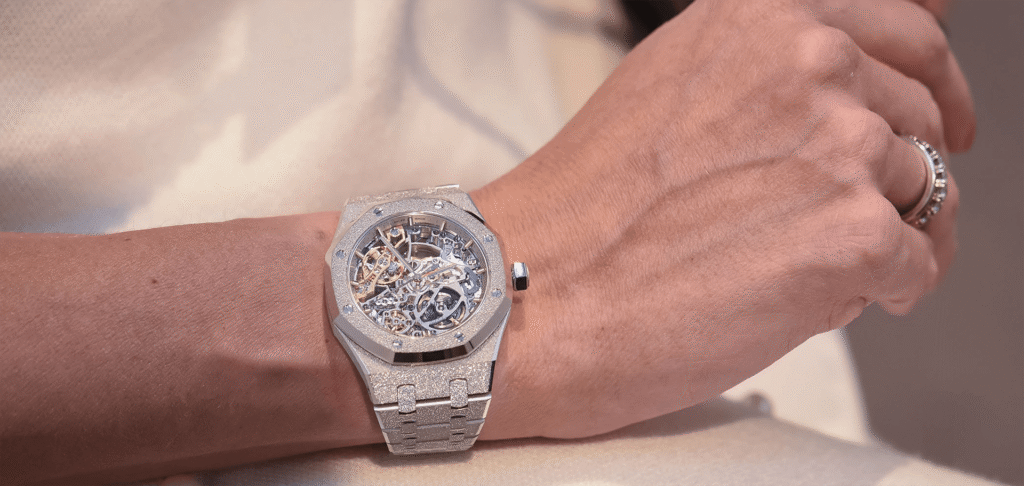
A Royal Oak at 37mm is a watch that surprises most buyers when they try it on. The integrated bracelet, which spans the full width of the case and flows into the wrist, gives it more presence than the number implies. The octagonal bezel with its eight screws is as visually distinctive at 37mm as it is at 41mm. What changes is how the watch sits on the wrist, and for a significant number of buyers, the 37mm version sits better.
The Royal Oak 37mm is particularly strong for buyers who are running the watch in more formal or office-facing contexts. It carries all of the Royal Oak’s design authority without the bulk of the larger references. In Dubai’s pre-owned market it trades with strong liquidity because the design has a broad buyer base globally. The Audemars Piguet collection at WatchX includes Royal Oak references across sizes.
The buyer who wants a compact sports watch
Patek Philippe Nautilus 7118 and Aquanaut
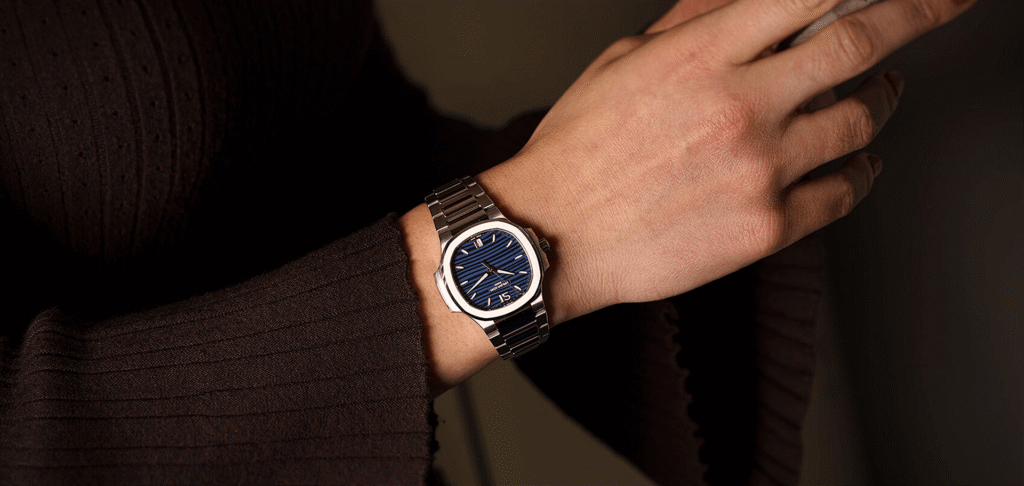
The Nautilus 7118 at 35.2mm was described in our luxury watch archetypes guide as a piece increasingly sought by collectors who want the Nautilus design in a more manageable proportion. That demand has continued to grow through 2026.
The Aquanaut in smaller variants makes a similar case for buyers who want the sporty, rubber-strapped identity of the Aquanaut without the 40mm-plus footprint of the standard 5167. Both Patek sport references reward buyers who have done their research. They are complex pieces to evaluate correctly in the pre-owned market, which makes the source and documentation of the piece especially important. The full Patek Philippe range at WatchX includes both families.
The buyer who wants a dress watch with collector credibility
The Cartier Tank, the Datejust 36 with a sunburst dial, and the Patek Nautilus 7118 all occupy different points on the spectrum from casual to formal. What they share is that each carries genuine collector interest independent of current market hype, which is the quality that matters most for buyers who are thinking five to ten years ahead rather than five to ten months.
How to choose the right size before buying pre-owned
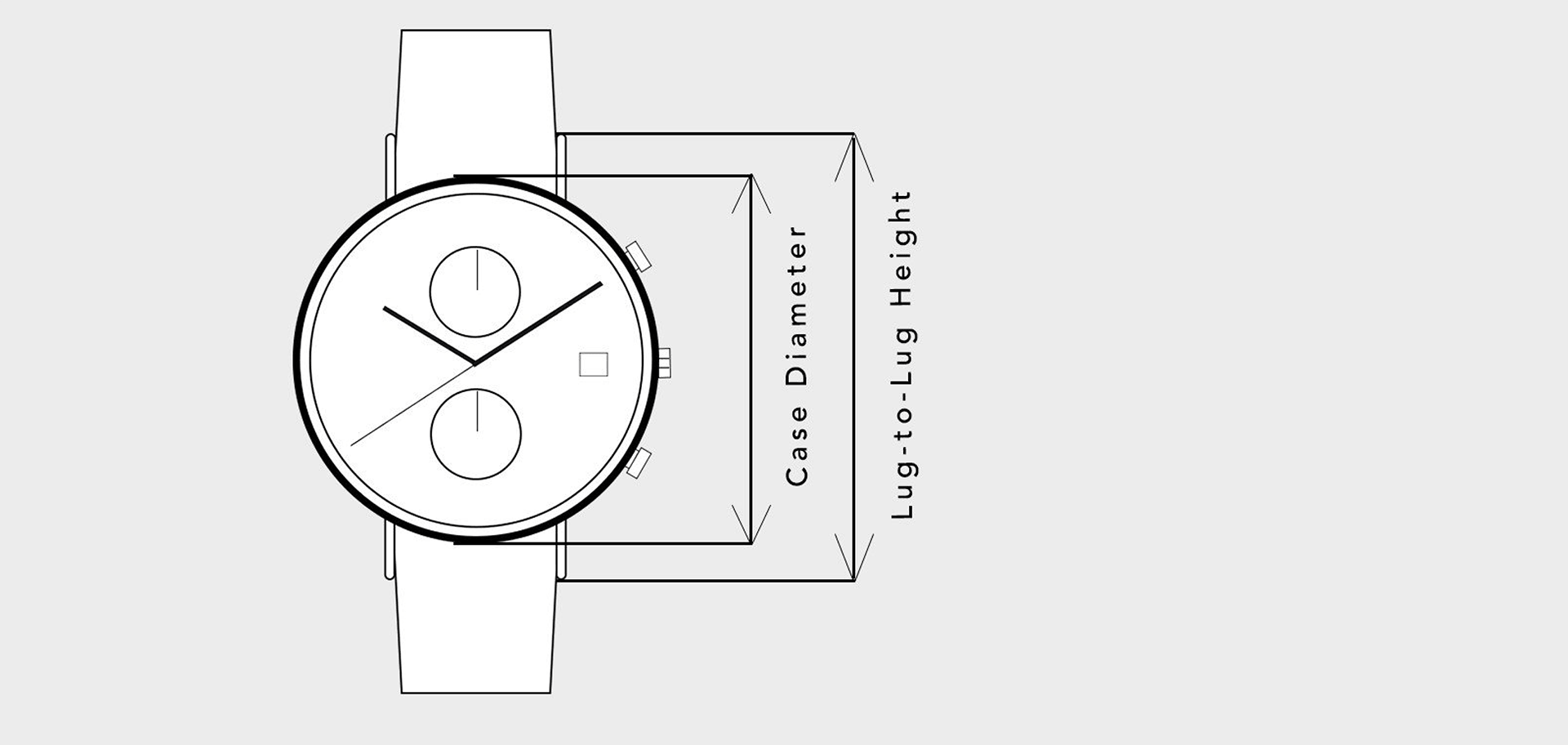
The most reliable advice here is simple: try it before you decide. A reference number tells you the diameter. It does not tell you the lug-to-lug distance, which is the measurement that determines whether a watch overhangs the wrist uncomfortably. It does not tell you how the bracelet weight distributes across the wrist, how the case thickness sits under a cuff, or whether the dial reads the way you expected at a normal arm distance.
Specific things to check before committing to a size:
Lug-to-lug, not only diameter. A 39mm watch with a longer lug span can wear larger than a 41mm watch with a compact, integrated bracelet. The Cartier Santos Medium illustrates this clearly.
Case shape and bracelet integration. An integrated bracelet watch, where the bracelet flows directly from the case without a gap, sits differently on the wrist than a watch with standard lugs and an attached bracelet. The Royal Oak and the Nautilus both wear closer to the wrist and with more distributed weight because of their integrated construction.
Your wardrobe. Lay your watch decision against the three or four outfit contexts you most commonly wear a watch in. A 36mm Datejust in a work shirt sleeve reads completely differently from the same watch under a casual jacket. Try both.
First watch, daily watch, or collection counterpoint. The right size for a first serious watch is not the same as the right size for a fifth piece that fills a specific gap. If you are building a counterpoint to a larger sports watch you already own, a compact dress piece might serve the collection better than another 41mm reference.
Do not choose a size because it is currently trending. Collector attention cycles. The 36mm is attracting interest now partly because the 42mm dominated for so long. Buying the right watch at the right size for your actual wrist and wardrobe is a better long-term decision than buying whatever is most discussed this September.
For buyers who want to work through this with experienced advice before purchasing, the WatchX Watch Concierge in Dubai handles exactly these kinds of decisions.
Does smaller mean better for resale in 2026?
Not categorically. Resale value is reference specific, condition specific, and documentation specific. A RolexSubmariner Date in 41mm with full box and papers in excellent condition is one of the most liquid watches in Dubai’s pre-owned market, and that is not changing because compact watches are attracting attention.
What is changing is the demand spread. A year ago, a Datejust 36 in an unusual dial combination might have taken longer to sell than a Datejust 41 in the same condition. Today, the 36 with a desirable dial moves faster than it did. That is a meaningful shift for buyers thinking about future liquidity.
The durable advice remains the same regardless of size trend. Buy a reference with genuine collector history, not only current fashion. Insist on complete documentation, box and papers, and service history where available. Buy from a dealer who inspects before pricing rather than sourcing from unknown sellers. And do not pay a size premium that is not explained by genuine scarcity in the specific reference you want.
The pre-owned collection at WatchX is updated regularly across all size categories.
Frequently asked questions
Are smaller luxury watches trending in 2026?
Yes, and the trend is visible across the industry rather than limited to one brand. Watches and Wonders 2026 and Geneva Watch Days both featured a clear move toward 35mm to 39mm references from both established houses and independent makers. Bulgari, Gérald Charles, and Bremont all launched notable compact watches at Geneva Watch Days in September 2026. The driver is collector interest in proportion and daily wearability rather than a specific fashion moment.
Is a 36mm Rolex too small for men?
No. The RolexDatejust was produced at 36mm for decades as its standard size and was worn across all genders without the sizing being considered relevant. What determines whether a 36mm watch looks right is the lug-to-lug measurement relative to wrist width, the case shape, and the bracelet. A well-chosen 36mm Rolex on a medium wrist typically
Should I buy a Datejust 36 or Datejust 41 in Dubai?
For professional daily wear and formal contexts, the Datejust 36 typically performs better. For a casual daily watch or a buyer who prefers more wrist presence, the 41 has more visual weight. Both references are well represented in Dubai’s pre-owned market with strong liquidity. The decision should come down to how the watch sits on your wrist and the contexts you most frequently wear it in, not which size is currently more discussed.
What are the best luxury watches under 40mm in 2026?
Several references stand out for Dubai buyers. The RolexDatejust 36 and Explorer 36 are the clearest Rolex arguments. The Cartier Santos Medium and Tank Louis are strong compact choices with historical depth. The Patek Philippe Nautilus 7118 is the compact sports watch reference with the strongest collector following. The Audemars Piguet Royal Oak 37mm carries full Royal Oak design authority in a more wearable proportion. All of these are available in Dubai’s pre-owned market with the right sourcing.
Why does a Cartier Santos Medium wear larger than its size?
The Santos Medium has a square case rather than a round one. A square case covers more horizontal wrist area than a round watch at the same measured diameter because the corners extend into the corners of the wrist space. The Santos at 35.1mm occupies the wrist roughly as a 38mm round watch does. The integrated bracelet also contributes: because it connects flush to the case, the watch appears longer on the wrist than a round case with standard lugs.
Is a 37mm Royal Oak a good everyday watch?
Yes, for most contexts. The Royal Oak 37mm carries the same octagonal bezel and integrated bracelet as the larger references, which means it has the same visual identity and design authority. Its lighter weight and more compact footprint make it more comfortable for extended daily wear, particularly for buyers with smaller wrists or those who wear a watch in formal settings more often than casual ones. It trades well in Dubai’s secondary market because the Royal Oak has a deep global buyer base.
Do smaller watches hold value better than larger ones?
Not as a general rule. Value retention is reference specific. The Rolex Submariner at 41mm is one of the most reliably liquid watches in the world’s pre-owned markets and that will not change because smaller cases are fashionable. What compact watches are doing in 2026 is attracting broader buyer demand, which improves their liquidity compared to a year ago. The safest approach is to buy a strong reference in the right size for your use, with complete documentation, rather than to chase either a size trend or a size contrarian argument.
Where can I buy certified pre-owned compact luxury watches in Dubai?
WatchX is a certified pre-owned luxury watch dealer based in JLT, Dubai. WatchX is not an authorised retailer for any brand referenced in this article.
There is a reason the world’s most important watch brands now treat Dubai as more than a retail stop. The UAE has become a market that shapes global allocations, influences production decisions, and sets the tone for how serious collectors approach the secondary market. Understanding what is driving that shift, and where it is headed, matters whether you are buying your first serious timepiece or adding to a collection you have been building for years.
A Market That Keeps Growing While Others Slow Down
When the Federation of the Swiss Watch Industry published its full-year 2025 export data, the numbers told a story worth paying attention to. Global Swiss watch exports fell 1.7% year-on-year, with sharp declines in China, Japan, and Hong Kong. The UAE moved in the opposite direction, recording a 3.5% increase in Swiss watch imports for the full year. In the first half of 2025 alone, the UAE imported over $770 million worth of Swiss watches, accounting for 58% of all Gulf imports from the five major GCC markets combined.
That figure does not happen by accident. It reflects a concentration of wealth, a tax-free purchasing environment, a mature collector base, and a city that has invested deliberately in positioning itself as a global horological hub. The UAE luxury watch market was valued at approximately $1.61 billion in 2024 and is forecast to reach $2.21 billion by 2030, growing at a compound annual rate of 5.21%.
Around 7,000 millionaires relocated to the UAE in 2024 alone, following 4,700 the year before. This incoming wealth is not passive. It enters the market, and a meaningful share of it enters the watch market specifically, because the UAE’s culture around luxury timepieces runs deeper than convenience or tax savings.
The Pre-Owned Market Is Outpacing New Watch Retail
The most significant structural shift in the UAE watch market right now is happening not in boutiques, but in the secondary market. The UAE pre-owned luxury watch segment generated $511.9 million in 2023 and is projected to reach $816.7 million by 2030, growing at a compound annual growth rate of 6.9%, faster than the broader luxury watch market.
This growth is not being driven by speculation. The post-COVID wave of flippers, who bought at retail and sold at inflated premiums, has largely exited the market. What remains is a buyer base made up of long-term collectors, family offices treating watches as portable wealth assets, and first-time buyers who have done their research and understand what they are acquiring. The profile of the UAE pre-owned buyer has matured considerably, and the standards they bring to a transaction, authentication, provenance, condition, and seller credibility, have risen with it.
Christie’s Dubai has been one of the clearest indicators of that shift. In 2021, it sold a Patek Philippe Sky Moon Tourbillon for $1.59 million, the first million-dollar watch sold online in the region. Since then, auction lots previewed in Dubai have routinely attracted record bids, including ultra-rare vintage Rolex models that have commanded up to $4.7 million at regional sales. Sellers now look specifically to the Gulf because they know buyers here understand value quickly and commit decisively.
For buyers looking to enter or expand in the pre-owned space, the current moment is being described by industry insiders as a buyer’s market, one where the correction from pandemic-era peaks has created access to serious references at honest prices, with no waitlists and no inflated hype.
Dubai Watch Week and the City’s Growing Influence on the Global Calendar
No single event better reflects Dubai’s standing in the horological world than Dubai Watch Week. The seventh edition in November 2025 drew more than 50,000 visitors across five days, hosted over 90 participating brands, including Rolex, Audemars Piguet, Patek Philippe, and more than 40 independent makers, and expanded its venue to over 200,000 square feet at Burj Park in Dubai Mall. It was the largest edition in the event’s ten-year history.
What made the 2025 edition particularly significant was the caliber of conversation it hosted alongside the watches. Rolex CEO Jean-Frédéric Dufour made a rare public appearance in conversation with the Chairman of Seddiqi Holding. The CEO Roundtable brought together the heads of Breitling, Richemont, Chopard, and Audemars Piguet. These are not conversations that happen at trade shows. They happen at events where the audience is taken seriously.
Ilaria Resta, CEO of Audemars Piguet, captured the city’s position plainly: “It’s a melting pot of different cultures. Dubai is at the crossroads of so many different cultural influences. There is an openness to innovation.” That openness, combined with a collector base that travels from Australia, Japan, and the United States specifically to attend, is why Dubai Watch Week is increasingly being called upon to become an annual event rather than a biennial one.
The GCC Collector Has Changed
The conventional portrait of the GCC watch buyer, someone purchasing a luxury piece as a status symbol at a flagship boutique, no longer captures the full picture. Today’s collector in the region is informed, selective, and increasingly focused on pieces that carry horological significance beyond their retail price.
FutureGrail, which tracks auction behavior across the region, forecasts that GCC buyers will account for 20% to 25% of top-value watch auction transactions globally in 2026, with over $200 million in watches expected to pass into regional hands in the next 12 months alone. The preference has shifted toward rare references, limited-production pieces, and watches with regional provenance, a category that commands serious premiums. A Rolex GMT-Master Ref. 1675 commissioned by Sheik Mohammed bin Rashid Al Maktoum sold for over $113,000 in 2024. A vintage Rolex Daytona Ref. 6265 commissioned by the UAE Ministry of Defense has sold for over $300,000. These are not anomalies. They are signals.
Men continue to drive watch transaction volume in the GCC, particularly through their interest in mechanical complexity and collector references. But women’s luxury watches represent one of the fastest-growing segments in the UAE market, a trend that market analysts expect to continue through the rest of the decade. The collector base is widening without diluting the sophistication that defines the most active buyers in the region.
What the Secondary Market Recovery Means for Buyers
The watch market experienced a meaningful correction between 2022 and early 2025, following the speculative surge of the pandemic years. Prices for major Rolex models fell around 5% in 2024. Audemars Piguet shed approximately 7.5% on the secondary market. Patek Philippe declined around 4%.
By 2025, the recovery was underway. WatchCharts data, cited in the Morgan Stanley Q4 2025 Watch Market Report, showed secondary prices rising 4.9% for the full year, a meaningful reversal from declines of 6.1% in 2024 and 10.7% in 2023. Rolex maintained its position as the only major brand consistently trading above retail price, with a value retention of +15.7%. Patek Philippe posted a 3.9% quarterly gain in Q3 2025, its strongest quarterly performance since early 2022.
For UAE buyers, this recovery plays out against a background of structural demand advantages that do not exist in most other markets. Production volumes for the most sought-after references remain tightly controlled. The brands that matter, Rolex, Patek Philippe, and Audemars Piguet, do not flood the market to chase short-term revenue. Their scarcity is by design, and scarcity in a market with growing buyer demand tends to support prices over time.
The watches that hold value share a consistent set of characteristics: limited production, a brand with uninterrupted mechanical heritage, complexity that cannot be replicated at volume, and a global collector base that does not disappear when the broader market softens. These are the pieces WatchX sources, authenticates, and brings to buyers in Dubai who understand the difference between buying a watch and buying a reference.
The Rolex GMT-Master II is the best watch for traveling across multiple time zones, and the 2026 FIFA World Cup makes the case more cleanly than any tournament before it. The competition spans 16 host cities across the United States, Canada, and Mexico, covering three time zones in a single tournament. The GMT-Master II tracks two zones simultaneously through a 24-hour hand and a rotating bezel, a function Rolex built into the watch from its 1954 origin, and the reason it has remained the collector’s standard travel watch for seven decades.
For a buyer in Dubai planning a trip to Vancouver, Los Angeles, Miami, New York, or Mexico City over the next few weeks, the practical case writes itself. The GMT-Master II is what gets put on the wrist in the morning and never needs to come off.
A watch built for pilots, kept by collectors
In 1953, Pan American Airways approached Rolex with a request. The carrier was opening transcontinental and transatlantic routes faster than its flight crew could adjust to, and pilots needed a watch that could display home time and destination time simultaneously. The answer was the original GMT-Master, reference 6542, launched in 1954. It was a 38mm steel case with a Bakelite bezel coloured red and blue, no crown guards, and a 24-hour hand that read against a rotating 24-hour bezel.
Pan Am crew adopted it as standard issue. So did the airlines that followed Pan Am into the jet age. The watch quickly developed associations beyond aviation. Honor Blackman wore a 6542 in Goldfinger in 1964. Chuck Yeager, who had broken the sound barrier in 1947 wearing a Rolex Oyster, moved to a 6542 by 1962. Fidel Castro became known for wearing two GMTs at once, one set to Havana and one to Moscow.
The first major update came in 1959 with reference 1675, which added crown guards and increased the case size to 40mm. The 1675 stayed in production until 1980 and is the reference most NASA astronauts and Soviet cosmonauts personally purchased through that period, even though Omega had won the official spaceflight contract.
In 1982, Rolex split the design into a parallel line: the GMT-Master II. The change that defined the new model was mechanical. The original GMT-Master used a coupled hour hand, meaning the 24-hour hand could not be set independently. The GMT-Master II separated the two, allowing the wearer to jump the local hour hand forward or back without disturbing the running time, the minutes, or the seconds. That single change is what made the watch genuinely useful to a traveler landing in a new zone. Set local time on the hour hand, leave the 24-hour hand on home time, and both zones are readable at once.
The last four-digit reference, the 16710, ran from 1989 to 2008. The five-digit line followed, then the current six-digit references with the in-house caliber 3285. The current movement holds a 70-hour power reserve and is certified to Rolex’s Superlative Chronometer standard, accurate to within 2 seconds per day. The case has remained 40mm since 1675.
How the GMT-Master II works during a multi-city trip
The mechanical principle takes a minute to explain, and the rest of your travels to appreciate. The standard hour hand and the 24-hour hand share the same central axis. The 24-hour hand makes one full rotation every 24 hours rather than every 12, so at any given moment it points to a specific hour on a 24-hour scale. Read against the dial; that hour represents whatever time zone you have chosen to track. Read against the bezel, the same hand can show a different time zone, depending on how the bezel has been rotated.
A practical example. A WatchX client in Dubai sets the standard hour hand to local Dubai time. They set the 24-hour hand to New York time. They fly to Toronto for the opening match. On landing, they rotate the bezel until the 24-hour hand reads Toronto time. The standard hour hand is jumped to local Toronto time. They now have three zones at a glance: Dubai (on the 24-hour hand against its original bezel reference), New York (on the 24-hour hand against the rotated bezel), and Toronto (on the main hour hand). One watch, no calculation, no app.
For a tournament played across three time zones in three countries, that is exactly the problem that one mechanical complication solves.
The current GMT-Master II lineup
The modern catalog has expanded into one of the most color-driven ranges Rolex produces. The references most commonly discussed in the Dubai pre-owned market are as follows.
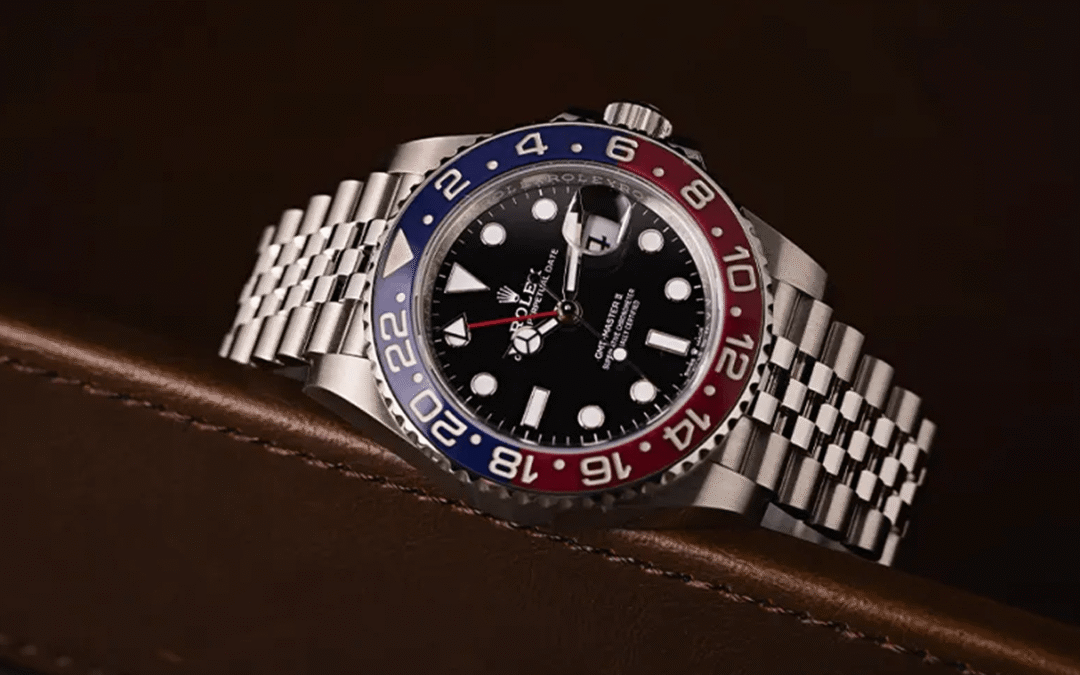
The 126710BLNR, known to collectors as the Batman, features a blue-and-black Cerachrom ceramic bezel on an Oyster bracelet. It was the first GMT to receive the ceramic bezel update in 2013 and is the most widely recognized modern variant.
The 126710BLRO, the Pepsi, brings back the original 1954 colorway in ceramic. It ships on the five-link Jubilee bracelet, which is part of why it became the most requested model at authorized dealers worldwide.
The 126720VTNR, the Sprite, is the destro reference, with the crown and date moved to the left side of the case at the 9 o’clock position. The bezel is black and green. It speaks to collectors who want something visibly different on the wrist without leaving the GMT-Master II line.
The 126711CHNR is the two-tone Root Beer in Oystersteel and Everose gold, with a brown-and-black bezel. The 126715CHNR is the solid Everose gold version of the same. Both reference the brown bezel GMT-Masters of the 1960s and 70s without copying them.
Current production at Rolex authorized dealers in the UAE is constrained by allocation. Most buyers source a current GMT-Master II from the certified pre-owned market, where availability is immediate, and condition is graded by the dealer. The WatchX inventory in JLT typically carries Batman and Pepsi references in stock, with Sprite and Root Beer variants rotating through.
What does the GMT-Master II cost in Dubai
The market has settled meaningfully since the 2022 peak. The rough current ranges in the Dubai pre-owned market are as follows.
A 2024 production Batman in excellent condition with full box and papers trades between AED 65,000 and AED 78,000, depending on year and bracelet wear. The Pepsi on Jubilee runs slightly higher, typically AED 78,000 to AED 92,000. The Sprite, given its lower production volumes and the novelty of the destro, sits in the AED 95,000 to AED 115,000 range for clean examples. Two-tone Root Beers run from AED 70,000 upward. Solid Everose Root Beers begin around AED 145,000.
These ranges reflect what WatchX sees moving through the market, not authorized retail. Pre-owned pricing fluctuates with availability and condition. A piece with a 2024-stamped warranty card and an unworn bracelet finds a buyer faster than a 2018 example with stretched links, even within the same reference. The May 2026 Rolex retail increase has compressed the gap between new and current-production pre-owned for several references, though Pepsi and Sprite still trade at meaningful premiums to retail due to allocation difficulties.
The vintage angle for collectors who want depth
For collectors building a portfolio rather than adding a working travel watch, the discontinued GMT references deserve attention. The 16710, the final four-digit reference in production from 1989 to 2008, offers the GMT function with an aluminum bezel insert in three colors (the black LN, the Coke red and black LNRO, and the Pepsi BLRO). It remains accessible in the Dubai market compared with modern ceramic-bezel production. Earlier still, the 1675 (1959 to 1980) and the original 6542 (1954 to 1959) are the references that built the model’s legend, with documented 6542 examples now sitting in genuinely investment-grade territory when paperwork is intact.
WatchX occasionally carries vintage GMT references when the right piece passes through. These tend to be reserved for buyers already in the WatchX network rather than listed publicly.
Practical considerations for World Cup travel
A few things worth knowing if the GMT-Master II is going on the wrist for a multi-city itinerary.
The Triplock crown gives the watch 100 meters of water resistance, which covers airport rain, hotel pools, and most weather. It does not invite swimming, particularly given that the 40mm case sits flush with most cuff types.
The Oyster bracelet is more secure for travel because of its Easylink extension, which provides an extra 5mm of adjustment on the fly when the wrist swells during a long flight. The Jubilee is more elegant and slightly more comfortable in the heat. Both ship with the same Glidelock micro-adjustment on current production.
The 70-hour power reserve means a watch taken off on Friday afternoon will still be running on Monday morning without being reset. For a traveler moving between cities every few days, this matters more than it sounds.
For climate variation between Dubai and the cooler host cities on the World Cup itinerary, particularly Toronto, Vancouver, and Boston, the watch holds accuracy well across temperature swings thanks to the Parachrom hairspring, which Rolex calibrates for thermal stability.
Buying a GMT-Master II in Dubai
The WatchX showroom in Cluster C, Jumeirah Lakes Towers, carries a rotating selection of GMT-Master II references across current and recently discontinued production. Every piece is certified by the WatchX team, with full documentation, original box, and warranty card where available. Trade-ins against an existing collection piece are part of the standard offering, and quotes against a watch already owned typically come back within 24 hours.
For collectors traveling to the United States, Canada, or Mexico for the tournament, choosing a GMT-Master II before the trip is one of the more practical decisions in the WatchX catalog. It is the watch that makes the entire itinerary easier to read.
The GMT-Master II is in stock at watchxglobal.com/shop, or the showroom can be reached on WhatsApp for a private appointment.
Is the Rolex GMT-Master II actually the best watch for traveling across time zones?
For most travelers, yes. The defining feature is the ability to track two time zones simultaneously through an independently set 24-hour hand. The rotating bezel makes a third zone readable. No other Rolex sport reference offers this function in the same form factor, and competitors at this price point that include a GMT function (the Tudor Black Bay Pro, the Omega Aqua Terra GMT) compromise on either water resistance, finishing, or movement specification relative to the Rolex caliber 3285.
What is the difference between the GMT-Master II Batman, Pepsi, and Sprite?
The names refer to bezel colors. The Batman (126710BLNR) features a blue-and-black ceramic bezel. The Pepsi (126710BLRO) has a red-and-blue bezel. The Sprite (126720VTNR) has a black-and-green bezel and is the left-handed reference, with the crown positioned at 9 o’clock. All three use the same caliber 3285 movement and 40mm Oystersteel case.
How much does a Rolex GMT-Master II cost in Dubai in June 2026?
Pre-owned pricing in the Dubai market in June 2026 ranges from approximately AED 65,000 for an entry-condition Batman to AED 115,000 for the Sprite, depending on the year, bracelet wear, and whether the piece comes with the original box and papers. Solid gold and two-tone variants run higher. Authorized retail prices are comparable on paper, but availability is constrained by Rolex’s allocation system, which is why most buyers in Dubai source the GMT-Master II from the certified pre-owned market.
Can the GMT-Master II track three time zones at once?
Yes. The standard hour hand shows local time. The 24-hour hand shows a second time zone against the dial. The rotating bezel can be turned to align the 24-hour hand with a third time zone reference. Most GMT watches show only two zones. The third-zone capability is part of what makes the GMT-Master II uniquely suited for travelers crossing multiple time zones in quick succession.
Is the Rolex GMT-Master II a good investment in 2026?
The GMT-Master II has historically held its value well, with certain discontinued references, such as the 16710 Pepsi, appreciating significantly in the secondary market since 2019. Current production references generally track retail closely in the Dubai pre-owned market. As with any luxury watch purchase, buying for use and enjoyment is the more reliable position than buying purely for appreciation. Investment-grade performance is a feature of the model, not the reason to acquire it.
Where can I see a Rolex GMT-Master II in Dubai before buying?
WatchX Global maintains a rotating inventory of certified pre-owned GMT-Master II references at the showroom in Cluster C, Jumeirah Lakes Towers. Viewings are by appointment, and the team is reachable via WhatsApp for live inventory checks and private bookings. The full live catalog is available at watchxglobal.com/shop
What other Rolex models work well for World Cup travel?
If the GMT-Master II is not the right fit, the Sky-Dweller offers a similar two-time-zone function alongside an annual calendar complication, in a slightly dressier case. The Explorer II also includes a 24-hour hand, though it lacks the rotating bezel and is designed primarily for cave and polar exploration rather than commercial travel. For most traveling collectors heading to the 2026 World Cup, the GMT-Master II remains the cleanest answer.
Rolex increased its global retail prices on January 1, 2026. The average increase is around 7%, with stainless steel models rising by roughly 5 to 6% and gold models climbing by 8 to 9%. For buyers in the UAE, the numbers are already locked in. The question is what to do next.
Why Rolex Raised Prices Again
This was not a surprise move. Rolex raised prices twice in 2025: once in January, and again in May after the Trump administration imposed new tariffs on Swiss watch imports. The January 2026 increase is the third in twelve months.
Three forces are driving this.
Gold prices.Rolex manufactures its own gold in an in-house Swiss foundry. As of early 2026, gold is trading above $4,500 per ounce, up roughly 70% since January 2025. Every gold, Everose, and Rolesor model absorbs that cost directly.
The Swiss franc.Rolex prices everything in Swiss francs. The US dollar has weakened approximately 12% against the CHF over the past year. That exchange-rate gap translates into higher retail prices in USD and, by extension, in AED.
Trade tariffs. US tariffs on Swiss watch imports currently stand at 15%, down from a peak of 39% earlier in 2025. The UAE is not subject to the same tariff exposure, which is part of why buying in Dubai remains attractive compared to buying in the US or UK.
The New 2026 Retail Prices in the UAE
Below are confirmed 2026 retail prices in AED for key references, compared to their 2025 pricing.
Steel models are expensive. Gold models are significantly more so. But these are the official authorized dealer prices, assuming you can actually get an allocation.
What This Does to the Dubai Secondary Market
Here is the part most buyers miss. The secondary market in Dubai does not follow retail price changes overnight.
For the most in-demand steel sports references, secondary market prices were already sitting well above retail before January 1, 2026. That gap has not closed. If anything, the retail increase validates the premium.
Current secondary market estimates in Dubai for key references:
For gold references, the picture is different. The secondary market on many gold models has softened. Some full-gold references now sell below or near retail on platforms like Chrono24, which means the stated MSRP increase on gold is not translating into the same secondary market lift.
Can You Actually Buy at Retail in Dubai?
The honest answer is: for most people, on most desirable references, no.
Ahmed Seddiqi and Sons is the primary Rolex authorized dealer in Dubai, with boutiques at Dubai Mall, Mall of the Emirates, and Atlantis The Royal. Sports models are marked “For Exhibition Only” in most cases. New buyers without a purchase history at the boutique face a multi-year wait for references like the Daytona or the GMT-Master II Pepsi.
Wait times for the most in-demand models as of early 2026:
Explorer and Datejust: Shorter, sometimes weeks to months
The Rolex Certified Pre-Owned program is available through Seddiqi in Dubai. Each watch comes with a two-year international guarantee and official Rolex authentication. It is a legitimate option, but inventory is curated and limited.
The Case for Buying Pre-Owned Now
This is where the price increase actually works in the buyer’s favor, if they know where to look.
Pre-owned Rolex watches sourced from trusted dealers are not subject to the same retail price resets or tariff exposure. A lightly worn Submariner or GMT purchased before the January reset was priced against a lower MSRP baseline. The new retail price makes that pre-owned piece more valuable by comparison, without the wait, without the relationship requirements, and often without the premium over retail that secondary market listings carry on the most sought-after steel sports models.
For gold and Rolesor references specifically, the secondary market has yet to fully absorb the retail increases. This creates a window where pre-owned two-tone and gold models from verified sources can represent real value against the new retail benchmarks.
Three reasons the pre-owned route makes sense right now:
Retail is out of reach for most buyers. Walk-in availability at Seddiqi for sports models is close to zero without a prior purchase history. Pre-owned is often the only realistic path to getting the watch you want.
The new retail prices are the new floor. Every future price increase pushes today’s pre-owned prices higher in retrospect. Buyers who wait typically pay more, not less.
Verification matters more now. With prices up across the board, the cost of buying an unverified watch from an unverified source has grown proportionally. A fully authenticated pre-owned piece from a source with documented provenance is the responsible purchase.
What WatchX-Sourced Pre-Owned Looks Like Against Retail
The comparison is straightforward. A WatchX-sourced pre-owned Submariner 124060 in excellent condition costs less than a brand-new one at retail, assuming retail were even available, which for most buyers it is not. The secondary market premium over retail on the Submariner currently runs around 15% on Chrono24 for unverified grey market pieces. A fully authenticated pre-owned unit through a trusted source sits in a more competitive range, particularly for reference generations that predate the January 2026 reset.
For gold models, the math is even cleaner. The Day-Date 40 in yellow gold is now AED 173,000+ more than it was two years ago across the series of 2025 and 2026 increases. Pre-owned Day-Date references from prior years, authenticated and serviced, represent access to the same watch at a significantly lower entry point.
If you are considering watches as long-term value holders, the WatchX piece on investing in watches versus gold covers the performance comparison in detail. For buyers navigating the authentication side of a pre-owned purchase, the WatchX authentication guide explains exactly what to look for and what questions to ask before committing.
Will Prices Rise Again?
Almost certainly, yes.
Gold is now trading above $5,000 per ounce, up from the $4,500 level that informed the January 2026 pricing. The Swiss franc remains strong. US trade policy is still unsettled. WatchesOff5th and Bob’s Watches both flagged that the conditions for a second 2026 increase are already forming.
Rolex has raised prices three times in twelve months. There is no structural reason that pattern ends. Every increase makes the watches you can buy today worth more than the ones you could have bought last year. That dynamic does not reverse.
The buyers who acted before January 2026 are already sitting on appreciated inventory. The buyers who act now are positioned ahead of whatever adjustment comes next.
The Bottom Line for UAE Buyers
Retail prices are set. Authorized dealer availability is limited. The secondary market premium on in-demand steel references shows no sign of compressing. And the reasons that drove the January 2026 increase have not gone away.
If you want a Rolex in the UAE today, the realistic options are: join an AD wishlist and wait years, pay secondary market premiums on grey market pieces from unverified sources, or buy pre-owned from a verified source at a fair price with documented authentication.
The third option is the one that makes practical and financial sense for most buyers. Especially right now, while the gap between pre-owned pricing and the new retail floor still favors the buyer.
The GCC is not a passive watch market. FutureGrail, the Singapore-based luxury auction house, forecasts that GCC buyers will account for 20 to 25 percent of all top-value global watch auction transactions in 2026, with over $200 million in watches expected to pass into regional hands. That is one in every four significant watches sold at auction going to the Gulf. What that tells you is not just that GCC buyers are serious collectors. It tells you the sell side of this market is just as active, and far less covered.
If you have a watch you want to sell or trade in Dubai right now, this is what you need to know before you make any calls.
Understanding Your Options Before You Move
There are three realistic paths for selling a luxury watch in Dubai: outright sale to a dealer, consignment through a trusted reseller, and private sale. Each one serves a different situation. Picking the wrong one costs money.
Outright Sale to a Dealer
You bring the watch. The dealer inspects it, makes an offer, and pays you the same day. The process takes hours, not weeks. The trade-off is that the dealer needs to build in a resale margin, so you typically receive 10 to 15 percent less than what the watch would sell for on the open market. For most sellers who want certainty and speed, this is the right route.
Consignment
You hand the watch to a dealer who lists it on your behalf at a price you agree to. You keep ownership until it sells. You do not receive payment until the sale is complete, which typically takes 60 to 120 days. The upside: consignment tends to yield 10 to 15 percent more than an outright sale because the watch reaches a broader buyer pool at closer to its true market value. Dealers generally charge a commission of 15 to 30 percent of the final sale price, with most averaging around 20 percent.
Consignment makes sense when:
The watch is a high-demand reference where market pricing is favorable
You are not in a rush to receive funds
You want maximum return without managing the sale yourself
Outright sale makes sense when:
You need liquidity quickly
The watch is a lower-demand reference where waiting for a buyer adds no clear upside
You want a clean, documented transaction with no ongoing obligations
Private Sale
Selling directly to another collector produces the highest possible return on paper. No commission, no dealer margin. The problem is everything else. Verifying the buyer, handling payment securely, managing authentication disputes, and navigating the risk of fraud or robbery are all on you. Armed robberies targeting watch sellers have increased significantly in 2026 across major luxury markets. In a city like Dubai where transactions often involve meaningful sums in cash or bank transfer, the operational risk of a private sale is real. For most sellers, the extra margin does not justify the exposure.
What Documentation Does to Your Price
This is where sellers lose money without realizing it.
Original box and papers, meaning the Rolex box, outer box, warranty card, and any original receipts or service records, can add 20 to 35 percent to a watch’s resale value versus the same watch without documentation. On rare or discontinued references, that gap can be higher.
Here is the practical breakdown:
Warranty card. This is the most important document. It confirms the original sale date, the reference and serial number, and links the watch to its first retail transaction. For a buyer on the secondary market, this is the closest thing to a birth certificate.
Original box. Both inner and outer boxes signal that the watch was stored properly and treated with care. The absence of the box does not kill a sale, but it tells a story about how the watch was handled.
Service history. Any paperwork from an authorized service center adds to buyer confidence, particularly for watches older than five years. A full-service receipt showing genuine parts and movement work removes a major objection from serious buyers.
Original purchase receipt. Confirms the original retail price paid and the point of purchase. Useful for high-value pieces where provenance matters.
If you have all of these, keep them together. If you are missing some, be honest about what you have. A dealer who knows the Dubai market will price accordingly. One who tells you documentation makes no difference is either not serious or not honest.
Which References Move Fastest in Dubai
Not all watches are equal in this market. Dubai buyers are informed, and demand follows reference categories the way it does in London or Hong Kong.
Rolex sports steel. The Daytona 126500LN, the GMT-Master II Pepsi and Batman, and the Submariner Date are consistently the fastest-moving references in the Dubai secondary market. Current secondary market prices show the Daytona steel at AED 134,500, nearly double its retail price of AED 67,450. The GMT Batgirl Jubilee sits at AED 74,000 against a retail of AED 48,000.
Patek Philippe steel sport. The Nautilus and Aquanaut references remain in sustained demand. The Nautilus 5711 alone trades at AED 385,000 against a retail of AED 128,558, a 199 percent premium. These are not liquid in the same way as Rolex sports steel, but when a serious buyer is ready, they move at strong prices.
Audemars Piguet Royal Oak. The 15510ST trades at approximately AED 190,000 against a retail of AED 105,750, an 80 percent premium. Royal Oak steel references with full papers are among the most straightforward pieces to sell in Dubai’s market.
References that move more slowly or at lower premiums:
Requires the right buyer; longer consignment periods typical
Heavily modified or polished
Significant value reduction; some buyers refuse outright
The fastest sales in Dubai happen when a watch is complete, unmodified, and from a reference category with established local demand.
The Risk of Selling Without Verification
Here is the part most sellers do not think about until something goes wrong.
When you sell to an unverified buyer or through an unvetted platform, the authentication burden falls on whoever receives the watch. If that buyer later disputes the authenticity of a part, a dial, or a movement component, the chain of responsibility comes back to the seller. In a market as active as Dubai’s, with significant volume passing through grey market channels, this is not a theoretical concern.
Selling through a verified, authenticated reseller transfers that liability. The reseller conducts the inspection, documents the condition, and stands behind the piece. Both the seller and the buyer are protected. This is not just good practice for the buyer. It protects the seller’s reputation and closes the transaction cleanly with no recourse. If you want to understand what an authentication process actually checks, the WatchX authentication guide at watchxglobal.com walks through every point of inspection, from serial verification to movement checks, in practical terms.
How the Trade-In Option Works
Trading up is a separate decision from selling. If you want to exit one watch and move into another, a trade-in through a trusted dealer handles both sides of the transaction simultaneously, with no waiting period between the sale and the purchase.
At WatchX’s JLT office, the valuation, the trade credit, and the handover happen at the same table. You see the outgoing watch’s value, the incoming watch’s price, and the final cash difference in one session. There is no gap where your money sits in limbo, no separate sale to complete before you can commit to a purchase.
This structure is particularly useful for:
Collectors trading across brands. Someone moving from a Rolex GMT to a Patek Aquanaut does not want to run two separate transactions.
Buyers who want to trade up within a brand. Moving from a Datejust to a Daytona, for example, where the outgoing piece has strong market value.
Anyone who wants to time the market. The current retail price increase on Rolex references means pre-owned models sourced before January 2026 carry more value against the new baseline. Trading that watch now rather than in six months captures that uplift.
Preparing Your Watch for Sale: A Practical Checklist
Before you contact any dealer or reseller, do the following:
Gather every document you have. Warranty card, box, receipts, service records. Even if the set is incomplete, bring what exists.
Do not polish the watch. A polished watch shows altered condition to any expert buyer. Scratches on sports models are expected and accepted. A freshly polished case raises questions about what was being hidden.
Check the reference and serial number. These are on the case between the lugs at 12 and 6 o’clock on modern Rolex references. Confirm they match your paperwork before the meeting.
Know the market price. Check current Chrono24 listings for your reference in similar condition and with similar documentation. This gives you a realistic anchor before any negotiation.
Have a realistic number. The secondary market premium exists for the references buyers want most. It does not apply to every piece. A Datejust 41 with papers might sell near retail. A Daytona steel with papers is a different conversation entirely.
For a deeper look at the references that carry sustained value over time versus those that track closer to retail, the WatchX piece on watch market corrections explains what happened to premiums during the 2022 to 2024 correction and what the current market is pricing in.
Why Dealing Through a Trusted Source Protects Both Sides
Dubai’s watch market in 2026 is not the same market it was in 2022 at peak premiums, and it is not the same market it was in 2024 at the bottom of the correction. It is a market that rewards buyers and sellers who know what they are doing and work with people who do the same.
A fully authenticated reseller like WatchX brings current market data, not guesswork, to every valuation. The prices offered are based on what watches are actually trading for in Dubai right now, not on outdated catalogues or conservative estimates designed to protect a dealer’s margin at the seller’s expense.
For sellers new to the pre-owned market, the WatchX reference number guide at watchxglobal.com is worth reading before any meeting. Understanding your own reference, what it tells a buyer, and what the market currently pays for it is the single most useful preparation a seller can do. It is the same information the buyer will have.
The collecting mistakes piece at watchxglobal.com covers the errors that cost sellers money, from holding a watch too long after a market peak to selling a modified piece without disclosing the alteration. Both mistakes are common. Both are avoidable.
The weeks after Eid in the UAE create a very specific environment in the luxury watch market. Gifts have been exchanged, collections have grown, and the secondary market quickly reveals which pieces actually hold attention and which ones are starting to look for new wrists.
If you gave or received a watch this Eid, or if you are thinking about one for a family member or business relationship, the question that matters most is not which brand looks impressive in a box. It is the watch that holds its ground when the occasion passes.
This guide answers that question directly for collectors building a serious portfolio, first-time buyers navigating their first significant purchase, and resellers and investors who treat watches as capital.
Understanding Post-Eid Demand in Dubai
In Dubai, gifting luxury watches at Eid carries genuine cultural weight. A watch given at this moment is not just a purchase. It signals respect, an occasion marked with permanence, and a level of intent that a card or a gift voucher cannot match.
After Eid, three distinct groups come into focus in the secondary market.
Collectors use this period to review what entered the market through gifts, which references might reappear for trade, and which models have quietly become harder to source in the right configuration. First-time buyers or those looking to upgrade often use the post-Eid window to move from a gift to something that better fits their taste and long-term goals. Resellers and investors watch for post-Eid listings, fast sales from owners who want liquidity over sentiment, and references that are mispriced relative to their actual demand.
Supply loosens slightly in the weeks after Eid as some gifted watches circulate. At the same time, genuinely sought-after references often tighten because the same event that put some watches on the market also permanently removed others.
What Happens to Pricing After Eid
The post-Eid period in Dubai is not a simple buyer’s market or seller’s market. It is a period when pricing clearly separates watches with genuine collector demand from those driven entirely by gifting trends.
You tend to see short-term selling pressure from people who received a watch that does not match their taste and want to convert it to cash. At the same time, seasoned collectors hold back during Eid and begin buying in the weeks that follow, when prices on common references soften slightly, and the quality of available documentation tends to be stronger. Rare or investment-grade references rarely move in price at all and often disappear from listings within days of appearing.
For buyers with a clear strategy, this is one of the better windows in the UAE watch calendar to acquire a specific reference without the pressure of a celebration forcing the timeline.
What Determines Long-Term Value in a Luxury Watch
Not every watch sold in Dubai during Eid holds its ground afterward. The ones that do share a consistent set of characteristics that experienced collectors and resellers apply before any purchase decision.
Authenticity and Verification
Authenticity is the starting point for value, not a technicality you address after the fact. A watch that is not fully verified becomes harder to trade, harder to insure, and less attractive to every serious buyer who comes after you.
A complete set, including the original box, warranty card, booklets, and accessories, supports pricing in every secondary-market transaction. The difference in AED between a full set and a watch sold without papers is not a matter of sentiment. It is a measurable number, often 13 to 25 percent depending on the reference, and it compounds over time as the watch passes from one owner to another.
Independent inspection by a certified watchmaker in Dubai covers movement checks, serial number confirmation, component consistency across the case, dial, hands, and bracelet, and comparison against official specifications. For first-time buyers, this process prevents expensive mistakes. For collectors and resellers, it protects exit value at every future transaction.
Limited Production and Genuine Desirability
Rarity matters, but only when real demand exists behind it. Limited runs, discontinued references, and short-production variants hold value when collectors actively seek them. They lose value when the rarity was manufactured as a marketing exercise rather than a consequence of disciplined production.
The references worth focusing on sit within design lines that have demonstrated lasting collector interest across multiple market cycles, not just the current season. Production numbers matter, but so does the question of whether a watch from that line will still be desirable in five or ten years, regardless of the trends at any given moment.
Movement Quality and Materials
A watch built around a respected movement, whether an in-house calibre or a well-regarded third-party mechanism, tends to hold its standing better than one where the movement is an afterthought to the design. Serious collectors in Dubai can name the calibre inside a reference as quickly as they name the model, and that knowledge influences how they price it.
Materials also matter for durability and long-term condition, and condition directly affects resale value. Stainless steel sports bracelets, ceramic bezels, and sapphire crystals hold up in the Gulf climate without requiring constant cosmetic maintenance.
Provenance and Documentation
Provenance is the chain of information that supports a price. In Dubai’s active secondary market, a watch with a clear, traceable ownership history, original purchase documents, and documented service invoices commands more confidence and attracts stronger offers than an identical piece with none of that in place.
Customisations without documentation are a specific problem. An owner who had a dial re-lacquered, or a bezel changed without recording it, will discover that fact at the worst moment, during a resale negotiation, when a buyer’s question about originality cannot be answered cleanly.
Brand Standing in the UAE Market
Not every heritage brand performs equally in the UAE secondary market. Some names command immediate recognition across all buyer profiles in Dubai. Others are respected by specialists but have limited liquidity among the broader regional audience.
The brands that consistently demonstrate both strong collector demand and practical secondary market liquidity in the UAE include Rolex, Patek Philippe, Audemars Piguet, Vacheron Constantin, and Cartier. Within each brand, specific lines and references create further separation. A Patek Philippe Nautilus and a Patek Philippe Calatrava carry the same name on the dial. Their resale trajectories in Dubai differ.
Service History and Condition
Condition is where value is gained or permanently lost. A watch with the right reference, brand, and documentation loses its pricing power due to poor maintenance, cosmetic neglect, or improper service.
Original parts preserved through each service interval are critical. Over-polishing is one of the most common and irreversible ways a UAE owner reduces their watch’s value. The brushed-and-polished contrast on an Audemars Piguet Royal Oak, the sharp case lines on a Nautilus, the original bracelet finish on a Vacheron Constantin Overseas: these are factory details that a polishing wheel cannot restore once it removes them.
For collectors managing investment-grade pieces, the instruction to a service centre is often explicit: clean, regulate, replace worn gaskets and crown, and do not touch the external surfaces unless structurally necessary.
The Watches That Hold Value After Eid in Dubai
These are not comprehensive brand reviews. They are practical notes on which references and lines have shown consistent demand, reliable secondary market liquidity, and genuine collector interest among UAE buyers.
Patek Philippe
Patek Philippe occupies a distinct position in the UAE secondary market compared with any other brand. The company produces approximately 60,000 watches per year and has publicly stated it will not expand production beyond that level. In a market where GCC demand is structurally growing, that discipline creates a consistent imbalance between what is available and what serious buyers want.
The Aquanaut offers a different entry point to the same brand. The Aquanaut 5167R in rose gold with the chocolate brown composite strap at AED 385,000 is particularly well suited to Dubai’s climate and active lifestyle. The composite strap handles heat and humidity, the 40.8mm case wears comfortably in the Gulf, and the Aquanaut line as a whole has demonstrated strong secondary market performance over the past decade. For buyers who travel regularly across time zones, theAquanaut Travel Time 5164A in steel, with a black dial, at AED 370,000, adds practical dual-time functionality to the same design language.
Vacheron Constantin is the oldest continuously operating watch manufacturer in the world, founded in 1755 in Geneva. In the UAE secondary market, the Overseas collection is where the appeal of practical collectors and investors is strongest.
The Overseas shares design DNA with the Nautilus and the Royal Oak in its integrated bracelet, sports-dress positioning, and appeal to GCC buyers seeking a technically serious watch that reads correctly at both a formal dinner and a weekend in the mountains. The key difference is availability and price positioning, which makes Vacheron Constantin an interesting option for buyers who want the same collector logic at a somewhat different level.
For UAE buyers who regularly travel across time zones, the Overseas Dual Time 7920V in steel with the blue dial, priced at AED 120,000, adds a second time zone display to the core Overseas design. The premium over the standard steel Overseas is modest relative to the added functionality for a Dubai buyer managing business across multiple regions.
Both brands warrant specific coverage beyond the scope of this article, given the depth of their secondary market presence in the UAE. Rolex sports models, including the Submariner, Daytona, and GMT-Master II, and Audemars Piguet’s Royal Oak in both steel and precious metals, remain the most liquid references in Dubai across all buyer profiles. WatchX carries authenticated inventory across both brands; you can browse current availability in the WatchX shop.
Building a Structured Cartier Portfolio
Whether you manage a multi-watch collection or a trading inventory, thinking in terms of structure rather than individual impulses makes a material difference. A practical Cartier framework for the UAE might include core holds, which are iconic references in preferred sizes and metals you plan to keep through several market cycles; tactical positions, which are pieces you believe have short to medium-term upside based on current demand among Dubai and GCC buyers; and rotation stock, which covers highly liquid models suitable for regular buying and selling to free up capital.
Review your portfolio at set intervals. Ask three questions for each watch: would you buy this piece again today at its current value, does it still fit your strategy, and is capital better placed in a different Cartier reference. The answers guide whether you hold, service, and hold, or prepare for resale.
How to Select the Right Watch to Gift in Dubai
A luxury watch gifted in Dubai after Eid should do three things at once. It should suit the recipient’s style, carry the right weight of occasion, and hold its own as an asset when the time comes for a valuation conversation. When you balance all three, the gift feels personal on the wrist and credible on a balance sheet.
Start With the Recipient
Before looking at references, build a short profile. What brands does the recipient already respond to? Do they wear watches daily or only for occasions? What case size suits their wrist? What metals and dial colours do they gravitate toward in other accessories?
For a seasoned collector, the gift should logically extend an existing theme, such as a missing complication within a brand they already hold, a different metal configuration of a reference they have admired, or a specific reference that complements rather than duplicates what they own.
For a first-time serious buyer or a young professional making a step up, prioritise a watch that can move between a business meeting and an evening event, with a design that will not feel dated in five years and a brand name that Dubai’s secondary market knows well.
For an investor or reseller, liquidity and documentation are the two decisive filters. Choose references that are widely recognised by UAE buyers, available in a configuration that suits a broad buyer pool, and backed by the kind of paperwork that closes secondary market negotiations quickly.
Aesthetics and Practicality for UAE Life
Dubai’s climate, social calendar, and cultural context create specific wear requirements that influence which watches actually stay on the wrist. Metal bracelets perform well in heat but can be uncomfortable in direct summer sun for extended periods. Composite and rubber straps, as on the Patek Philippe Aquanaut and the Vacheron Constantin Overseas, handle the Gulf climate well and read as modern rather than casual. Leather straps on formal pieces suit cooler months, indoor events, and evening wear.
Dial legibility matters in Dubai’s social environment, where a watch is often read quickly and also draws attention. Clean, high-contrast dials with clear indices and legible hands tend to project more presence than complex dials that require study to tell the time.
Case size preferences in the UAE have generally favoured 40 to 42mm for men and 35 to 38mm for women, though individual wrist proportions always override general trends.
Complications Worth Considering
A complication adds value when it serves the recipient’s actual life. A dual-time or world-timer function is genuinely useful for a Dubai-based business professional who regularly operates across multiple time zones. An annual calendar reduces the need to adjust the date each year. A chronograph serves a practical function for some buyers and is primarily a design feature for others.
Complications also affect service cost and interval. A Patek Philippe perpetual calendar requires service every three to five years and costs more than a time-only Nautilus. Before recommending or gifting a watch with significant complications, it is worth confirming that the recipient is aware of and comfortable with what long-term ownership of that movement involves.
Authentication, Service, and Warranty in Dubai
After Eid, Dubai’s secondary market fills with gifted watches moving quickly between owners. This is precisely the period when authentication and service history matter most, because the pace of transactions creates opportunities for undisclosed issues to pass unnoticed.
Authentication as the First Step
Every watch sold or gifted in Dubai deserves independent verification before serious money changes hands. Physical inspection covers movement checks, serial number confirmation against records for Cartier , Rolex, Patek Philippe, or Vacheron Constantin, component consistency across all external parts, and, where diamonds are present, an assessment of whether the stones are factory original.
The inspection should produce a written report. For high-value pieces, that report becomes part of the watch’s documentation and supports every future transaction. Without it, you are asking the next buyer to trust your word rather than a record, which costs you both time and AED in any negotiation.
Service History as a Selling Tool
A watch with a documented service history sells faster and at a higher price than an identical piece with no maintenance record. For mechanical watches, a service interval of every three to five years is standard guidance from most major manufacturers. Each service produces an invoice that should be kept with the watch, noting the date, the workshop, the work performed, and the parts replaced.
For pieces approaching a service due date at the time of gifting, the decision whether to service before gifting or to hand over the watch with a service voucher and clear disclosure is a practical one. Either approach is legitimate, but the recipient should understand the service timeline of what they are receiving.
Original case lines should be preserved through every service. Ask the workshop explicitly not to polish the external surfaces unless structural damage requires it. This instruction costs nothing to give and can protect thousands of AED in future resale value.
Warranty Considerations
An active manufacturer’s warranty transfers confidence to any buyer or recipient. Know the warranty status of any watch you are gifting, how long it remains, what it covers, and whether it transfers to the new owner. Extended dealer warranties can add coverage, but only hold value when the warranty provider is an established entity with a physical presence in the UAE that can actually honour the commitment.
For pre-owned pieces, a WatchX authenticity guarantee and service documentation serve as the primary assurance, replacing the original manufacturer’s warranty. Every piece at WatchX is inspected and priced with that documentation clearly noted.
Navigating the UAE Secondary Market Channels
The UAE secondary market for Cartier women’s watches is layered. Authorised and established retailers typically offer slower but well-documented resale, suited to high-value or rare pieces where trust is central. Specialist pre-owned dealers tend to move mid-range steel, two-tone, and popular gold references efficiently, often with trade-in or consignment structures. Direct private sales can improve net proceeds but require strong proof of authentication and care with payments and paperwork.
For collectors focused on provenance, the priority is working with trusted counterparts whose standards match their own. For younger professionals, speed, clarity of AED proceeds, and safe handling often matter more than squeezing the last margin. For investors and resellers, the priority is liquidity, predictable spreads, and a repeatable process. Whichever profile fits, the approach is the same: treat each Cartier women’s watch as an asset that deserves a resale plan from the day you buy it.
Managing Your Watch Portfolio After Eid
Post-Eid is one of the more useful windows in the UAE calendar for collectors and resellers to reassess their holdings. Gifts have arrived; some pieces feel redundant, and the secondary market clearly shows which references have real depth of demand and which were driven by seasonal emotion.
What to Keep, Trade, or Sell
The framework is straightforward. Keep watches with strong provenance, documented service history, and clear regional demand, particularly if they anchor a collection theme or hold a configuration that is becoming harder to find. Trade pieces that are desirable but overlap with something else you own in function, metal, or style. Sell watches with weak documentation, heavy cosmetic wear, or models that Dubai buyers treat as commodity items with no pricing premium.
This triage applies to a first serious collection, a diversified portfolio, and an active trading inventory. The goal is to concentrate your holdings into pieces that you would buy again today at their current market value.
Trade-In as a Portfolio Tool
Trade-in can be efficient for an upgrade when the process is structured correctly. Request a written valuation that separates the purchase price of the new watch from the trade allowance offered on the outgoing piece, and state clearly whether any fees apply. Compare the trade allowance against current secondary market asking prices for the same reference, condition, and documentation level. Do not anchor to what you originally paid. The relevant number is what the market pays for that watch today.
A fair trade-in at WatchX starts with a transparent written offer. If you are considering a post-Eid upgrade or rotation, contact the team directly to discuss a specific reference and get an honest starting number.
Post-Eid Secondary Market Channels in Dubai
Dubai offers several routes for buying and selling, each with a different balance of speed, net proceeds, and documentation quality. Specialist pre-owned dealers, including WatchX, typically offer the best combination of authentication, transparent AED pricing, and practical trade-in structures for mid-range to high-value references. Direct private sales can improve net proceeds but require strong authentication and careful attention to payment security and documentation transfer. General marketplaces can be useful for research but require more buyer vigilance around authentication and seller credibility.
For high-value pieces, the added assurance of working with an established UAE-based specialist is worth the margin difference.
Choosing the Right Reference for a Post-Eid Gift
The summary framework for any serious gifting decision in Dubai is direct.
Define the recipient’s profile: their daily context, their existing watch collection if any, their preference for sports or dress, steel or gold, and what they are likely to do with the watch over the next ten years. Apply a brand filter based on genuine UAE secondary market liquidity. Narrow to a specific reference by assessing condition, provenance, configuration, and documentation. Confirm service status and warranty coverage before finalising.
The brands and references that consistently check every box in this framework for UAE buyers are Patek Philippe, Vacheron Constantin, Rolex, Audemars Piguet, and Cartier. Within each brand, the references that hold their ground year after year are the ones the market has already voted on through a decade or more of secondary market transactions.
WatchX carries authenticated, fully documented inventory across all of these brands with transparent AED pricing. You can browse current availability across Patek Philippe, Vacheron Constantin, and all major references in the WatchX shop, or contact the team directly for a specific enquiry, a trade-in discussion, or guidance on which reference fits a particular gifting context.
Every piece at WatchX is inspected, authenticated, and priced with full specification notes. The watches are available now, not after a five-year wait.Visit our website or contact us directly to discuss a specific reference.
All watches at WatchX Dubai are authenticated in-house and carry a written guarantee. Pricing is in AED. Service using genuine parts only.